

If you’re here, you may have already read our Ethos page. That page offers a zoomed‑out view of how Camp Augusta thinks about camp, childhood, and what makes this place different.
This page zooms in.
Here, we name some of the models and core philosophies that guide how we mentor campers, support one another as staff, and help people grow as human beings. These philosophies shape the conversations we have, the way we handle mistakes, how we respond to conflict, and how we encourage growth—both in campers and in ourselves.
You won’t find this kind of depth named so clearly at most summer camps. At Camp Augusta, we believe that how we relate to one another matters just as much as the activities we do.







What We Mean by “Philosophies”
When we use the word philosophies, we don’t mean abstract ideas or beliefs you’re expected to agree with. We mean shared ways of seeing people and situations—common lenses that help us respond thoughtfully rather than react automatically.
These philosophies:
- Give us a shared language for growth
- Help us handle challenges without shame or blame
- Guide how we mentor, lead, and repair when things go wrong
- Support emotional security while still encouraging responsibility and challenge
They are practiced daily, in ordinary moments: a cabin disagreement, a homesick camper, a staff meeting, a tough conversation, a small success.
Why These Philosophies?
These philosophies are multifaceted in their use.
They synthesize our values, create aligned action, and enable shared language. They’re also more than philosophical: they offer grounded models, processes, and tools for enacting/transferring/guiding actions for greater flourishing, for oneself, others, and the community.
An Unusually Intentional Foundation
This foundation draws from evidence‑based counseling practices, socio‑emotional research, best practices in education and camping, and the work of influential thinkers such as Marshall Rosenberg (founder of Nonviolent Communication and student of Carl Rogers), the Conscious Leadership movement, and multidisciplinary counseling literature. Our philosophical curation has also been shaped by the broader science‑based work of AMeaningofLife.org and is supported by formal academic engagement, including connections to Prescott College coursework and ongoing scholarly development.
We have the most extensive staff training of any camp in the country, where the staff complete 450+ pages of manuals and readings, and more. Before they are hired, they undergo a rigorous selection process, involving essays, and hours of multi-step interviews.
Take a look at the TOC from our philosophies manual below. (to see the whole manual, you’ll have to come work with us! 🙂)
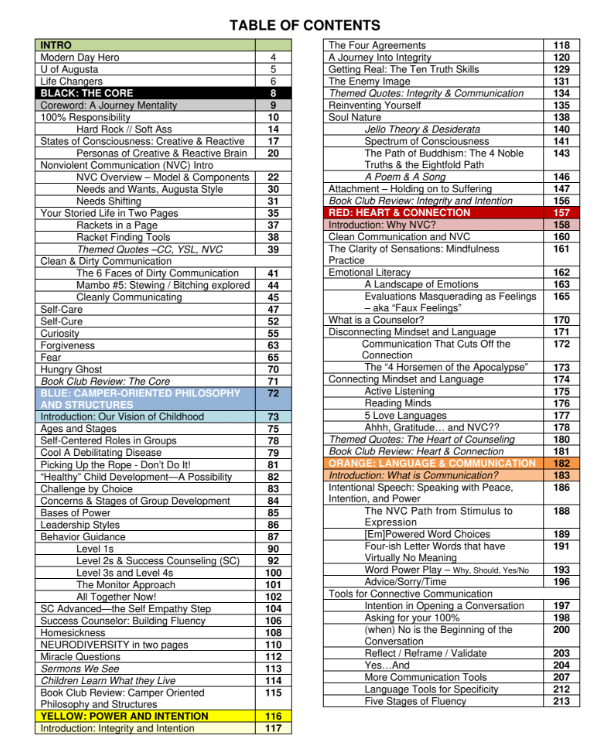
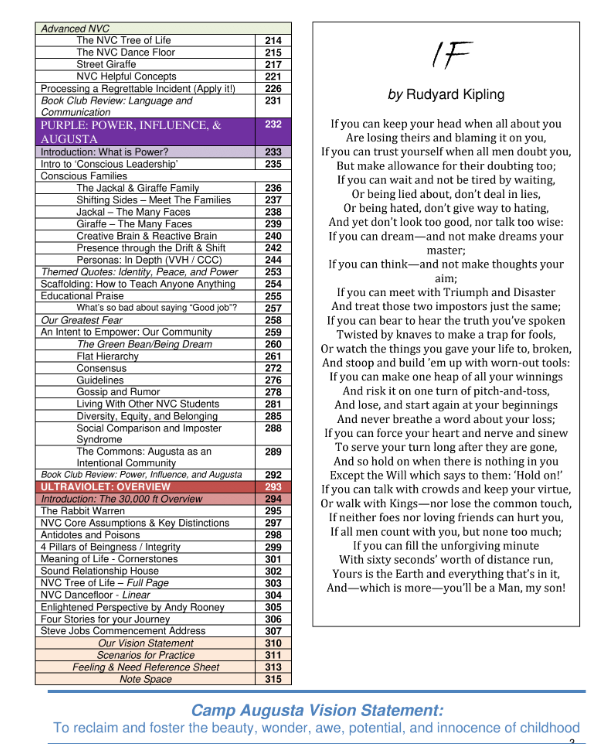
A 300‑page manual and intentional training process may seem unusual for a summer camp. For us, it is the groundwork for something rare: a community where mentors communicate clearly, repair well, lead consciously, and model the kind of growth we hope to inspire in campers.
And, these philosophies take intentional practice and experience. That’s why our staff spend about 40 hours engaging with them before arriving at camp, and 3+ weeks of staff training to practice applying these skills together. With role-playing scenarios, practice activities, and personal application, we take these ideas off the page and into life.
The result is a shared language and a shared aspiration. Rather than hoping a strong culture emerges by accident, we name what we are building. We articulate expectations. We practice the skills required for healthy community.
The rest of this page is a sampling of some core philosophies that guide life at Camp Augusta. Within our community, they’re not rules…they’re more like frameworks that we tend to find useful to guide how we think and communicate with each other in the camp setting.
And these philosophies are not static. They continue to evolve through years of reflection, research, and lived experience—curated, refined, and practiced together.
Nonviolent Communication is a way of speaking and listening that focuses on understanding what’s underneath behavior—needs, feelings, and values—to foster connection. In doing so, it can be an incredible help with conflict, tension, and blame. It’s about seeing and being seen, connecting people in quiet moment, and even in ‘loud’ ones, too.
At Camp Augusta, NVC helps us slow down and listen more deeply, especially during moments of tension. It supports honest expression without threat or punishment, and curiosity without judgment.
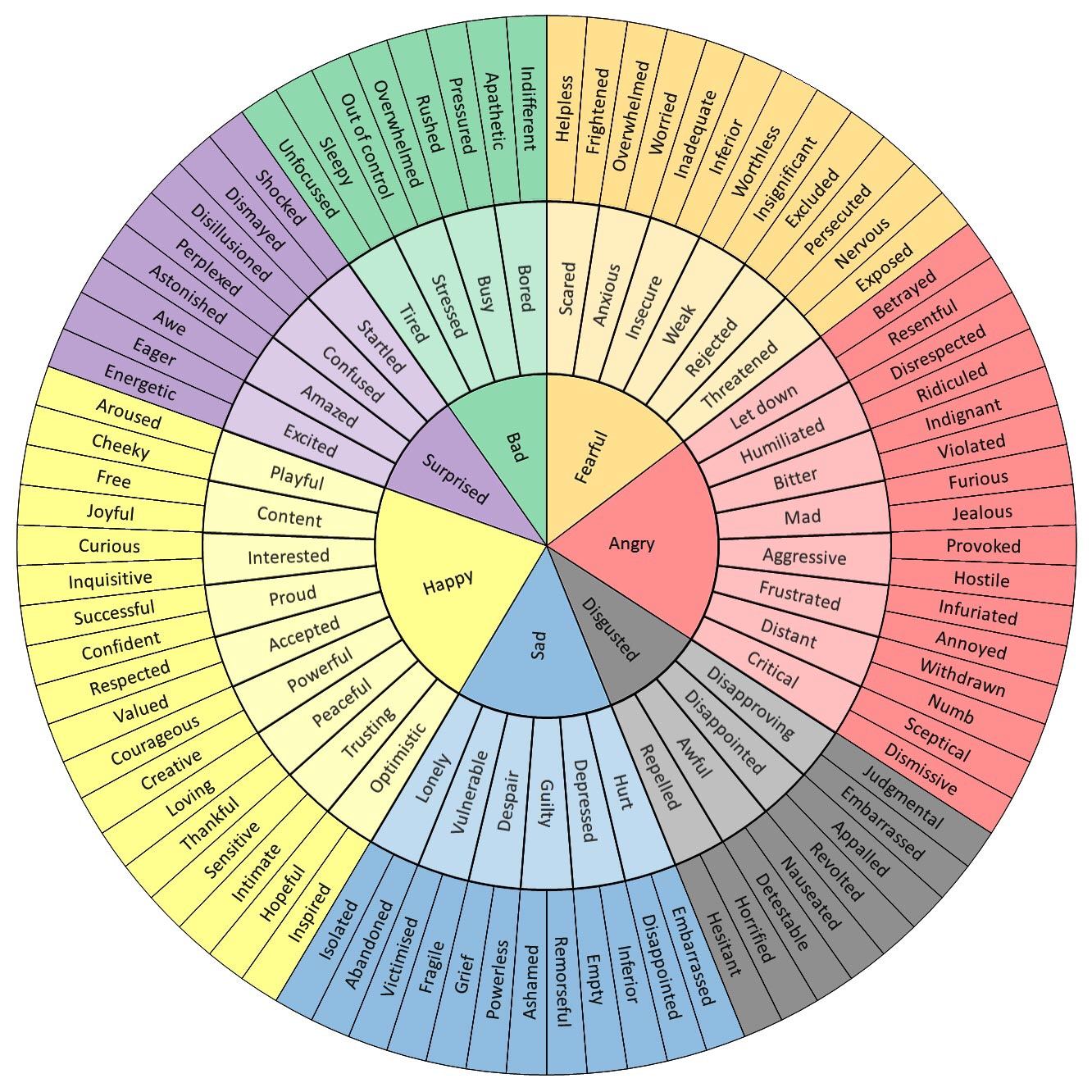
You’ll see this in camper conflicts, staff feedback conversations, and moments when strong emotions are present.
Why this matters at camp: Community works best when people feel heard, understood, and respected—even (especially) during disagreement.
Clean Communication means saying what we mean clearly, directly, and honesty—without hidden messages, sarcasm, or emotional buildup. Intentional Speech means speaking with conviction and accuracy.
At camp, anyone can request a clean communication conversation with anyone else, and time will be scheduled for that converastion to happen – with mediation if desired. This philosophy helps prevent misunderstandings and unnecessary/lingering drama. It encourages timely, direct conversations instead of avoidance, gossip, or escalation.
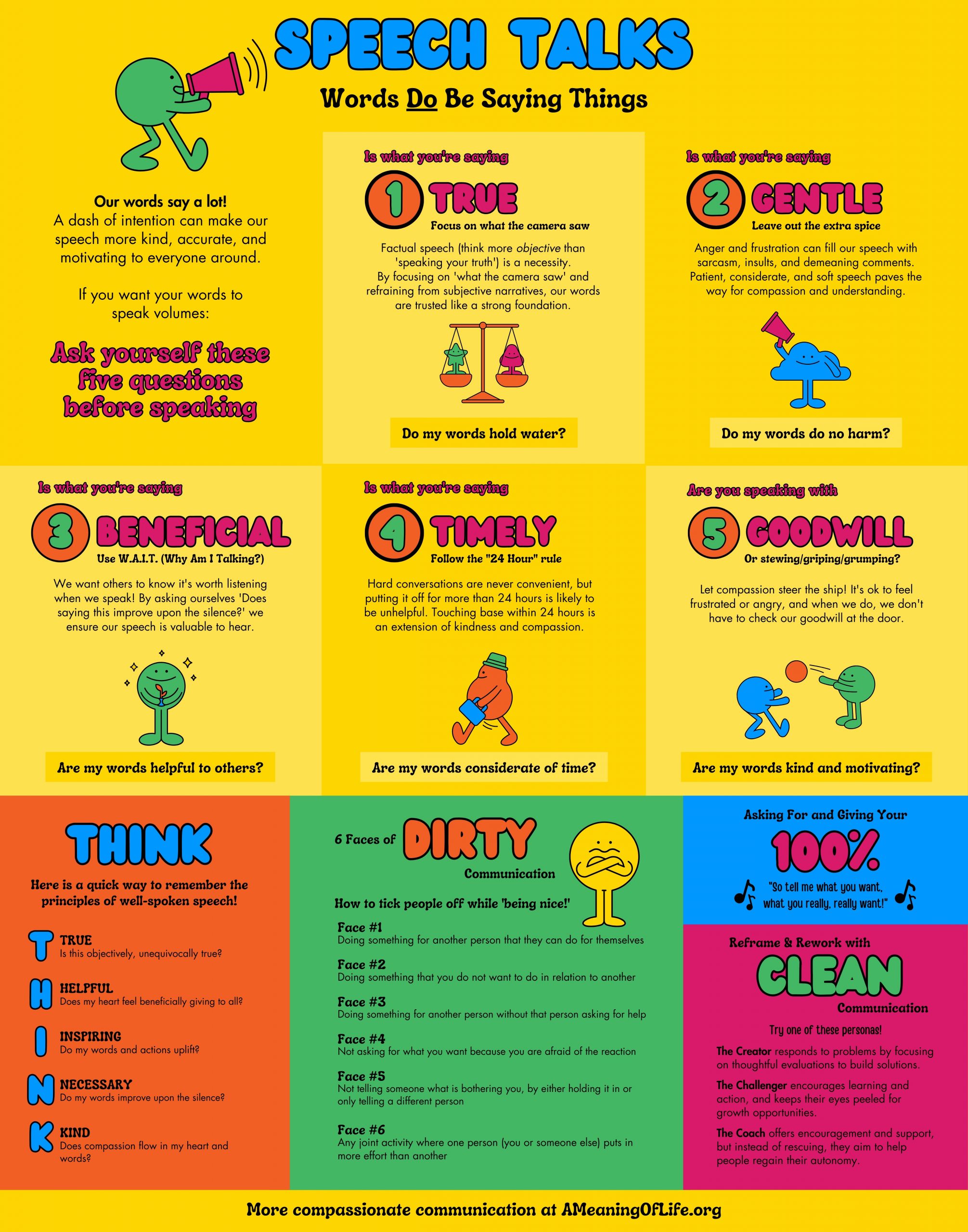
Clean communication is when your heart and your mind match your words and your actions. When it’s combined with NVC, it has the element of compassionate and clear connection.
Clean communication isn’t necessarily around a problem or a challenge. It can also be an element of sharing vulnerability or gratitude.
Staff practice Clean Communication with each other and model it for and with campers, creating a culture where issues can be addressed early and repaired effectively. When staff notice issues arise in the cabin, they are trained to bring them up in a healthy way.
Why this matters at camp: Clear communication keeps relationships (and communities) healthy and allows small issues to stay small.
Success Counseling is a counseling framework that helps draw understanding, ideas, and solutions from the person/s involved. This same model can and often is applied to things like cabin dynamic challenges, regrettable incidences, homesickness and individual joy at camp, or even group mediation. It is about helping guide others to succeed without rescuing or controlling. It is grounded in individualized values and aligned expectations. Success counseling is also about connecting around a positive challenge, such as how to structure one’s clinic choices at camp or how to greater step into vulnerability or other diverse expressions.
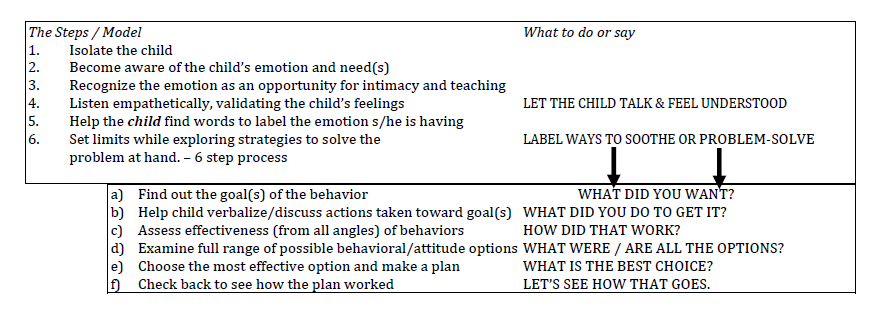
The first part of Success Counseling is always about genuine connection with the experience of the other person. This allows for the heart to open and to make lasting change possible. RRV (reflect, reframe, & validate) is a go-to technique we use for de-escalation and connection – helping someone get to a grounded and open headspace so success counseling is possible.
We support growth while honoring each person’s ability to stretch and learn.
Why this matters at camp: Lots of behavior change models focus on the behavior without having an impact on the heart and/or mind. Success Counseling focuses on impact at the heart and change level, with actions chosen by the individual themselves. This fosters lasting change and empowered learners. We aim to never engage in punishment, reward, guilt, or buddy approach (do it because we’re friends) as a way of behavior guidance; we believe these are generally shallow/superficial ways to impact behavior.
100% Responsibility means taking full ownership of our choices, reactions, and impact—without blaming others or ourselves. It is the backbone of understanding our power and agency in our life, rather than ‘blaming’ our life on others. It fosters positive, future-oriented thoughts and learning.
At camp, this doesn’t mean being perfect or never making mistakes. It means recognizing that even when situations are hard, we still have choices about how we respond. This philosophy emphasizes agency, not guilt.
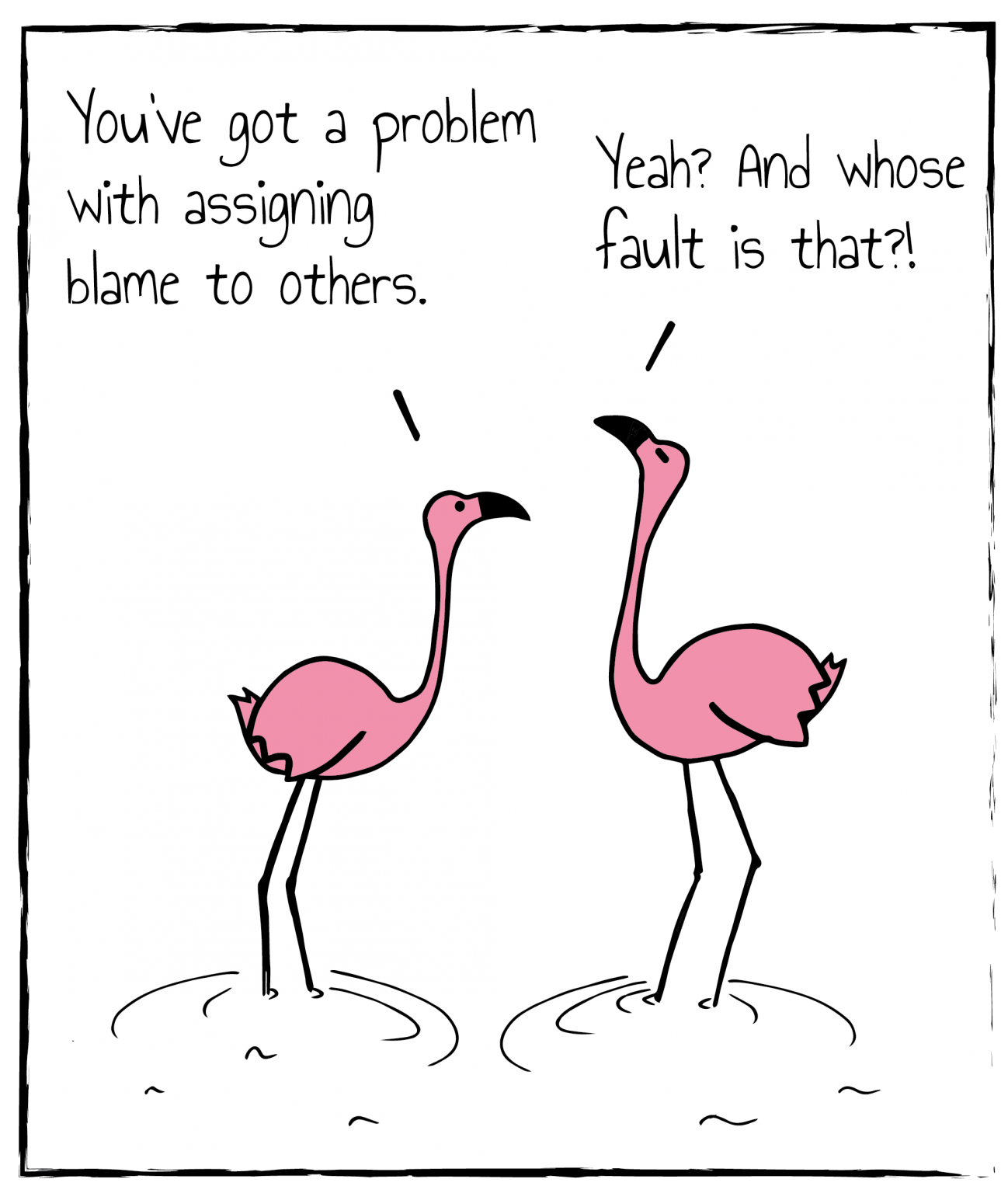
You’ll see this in how we address conflict, how leaders model accountability, and how campers are encouraged to learn from their actions rather than be defined by them.
Why this matters at camp: Responsibility builds trust, resilience, and a sense of personal power. It is a basis on which functional communities (and societies) are built.
Every person lives inside an internal story about who they are: what they’re good at, how they relate to others, what’s possible for them. Some of these stories are empowering. Others quietly limit growth.
At Camp Augusta, we help campers and staff notice the stories they’re believing and living—and discover that stories can change. In fact, the ability to understand that our story can change and we have agency in changing that story is one of the most empowering, foundational ideas of Augusta.
YSL is about being conscious of the opportunity in each moment to engage with narrative, directing it clearly towards positive growth.
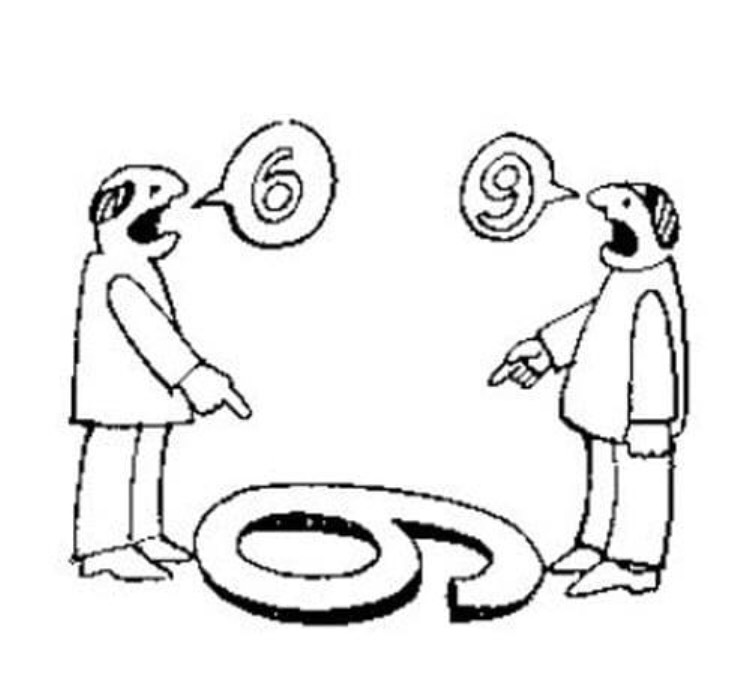
You’ll see this when a camper who believes they’re “bad at friends” starts to see themselves differently, or when a staff member realizes they’re not stuck being “the quiet one” or “the strict one.” Camp offers a rare pause from old patterns, making it easier to try on new ways of being. And we have a language that enables us to address limiting narratives about ourselves.
Why this matters at camp: Camp is a powerful moment of interruption from camper and staff’s ‘standard narratives’; they are surrounded by new ideas, activities, schedules, and people. This loosens old stories, and growth becomes possible.
Presence means giving our full attention to the moment and to the people in it. Vulnerability is courage. And Security is the social environment we foster to make these things possible, helping the individual feel emotionally safe.
Growth requires safety. We cultivate environments where people can be real—where vulnerability is met with care, not ridicule.
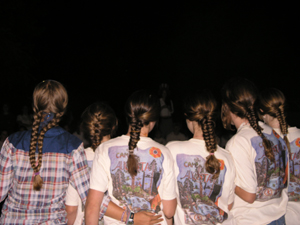
From Embers circles to deep community relationships to one‑on‑one conversations, we encourage honest reflection and courageous sharing.
Why this matters at camp: When people feel safe to be seen, deeper growth (and connection) becomes possible.
Camp is more than entertainment. The camp director of 20 years has spent about as long developing a comprehensive model to understand meaning in our life, with it being supported by 4 cornerstones.
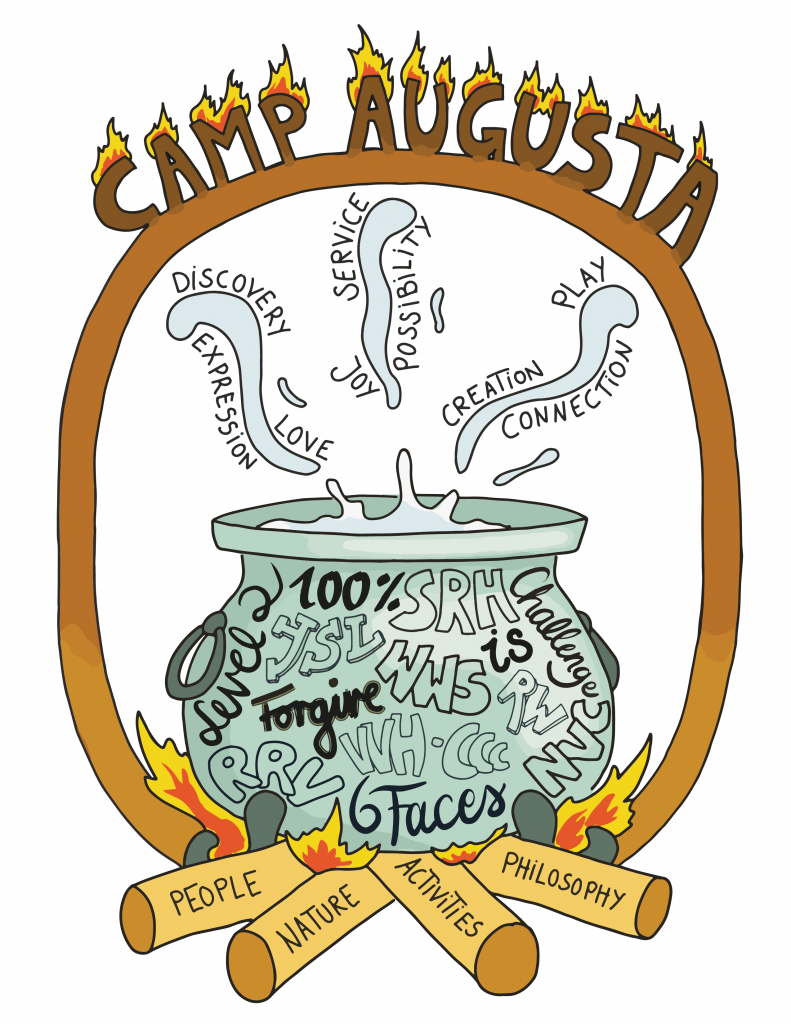
We intentionally weave these cornerstones into the camp experience. Campers and staff are invited to consider what matters and why, in an environment supercharged with meaning, in all of its 4 cornerstones:
- Discovery is everywhere! Campers try handfuls of new things everyday, meet new people, and wake up to new imaginative ideas. And discover deeply about themselves as well, like at Embers.
- Service opportunities abound. CAPPs are just one example.
- Love is found in new friendships, new relationships, and acts of vulnerability, listening, and compassion.
- There is probably more Expression at Augusta than almost any other place on earth! Cabin Acts, Playstations, Clinics, and more.
Why this matters at camp: Camp is full of all of the elements of well-being, and we put extra care into the meaning, the most important of them all.
A rich life includes novelty, challenge, beauty, complexity, and awe. At Camp Augusta, every part of the day—from Wake-Ups and Embers, to Playstation and EPs to Clinics and Cabin Life—is designed to create psychological richness and promote curiosity.
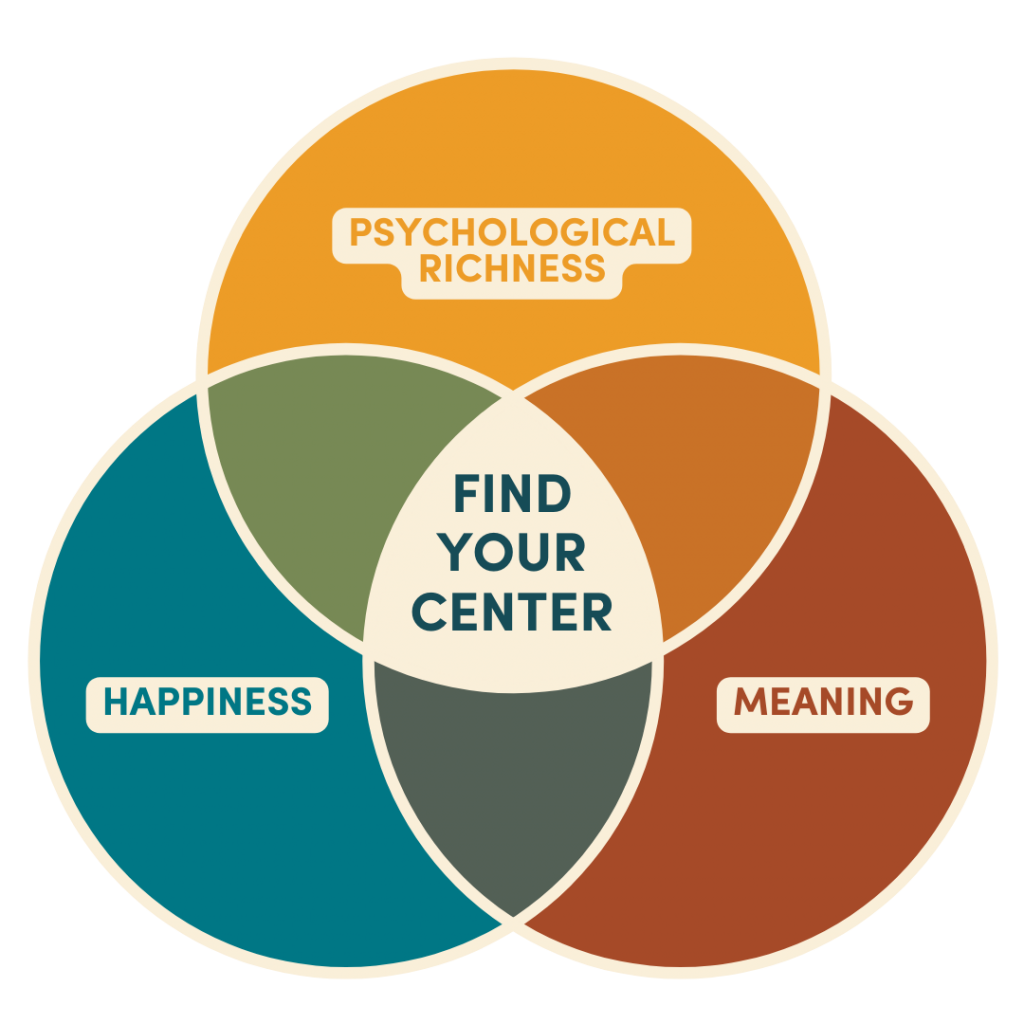
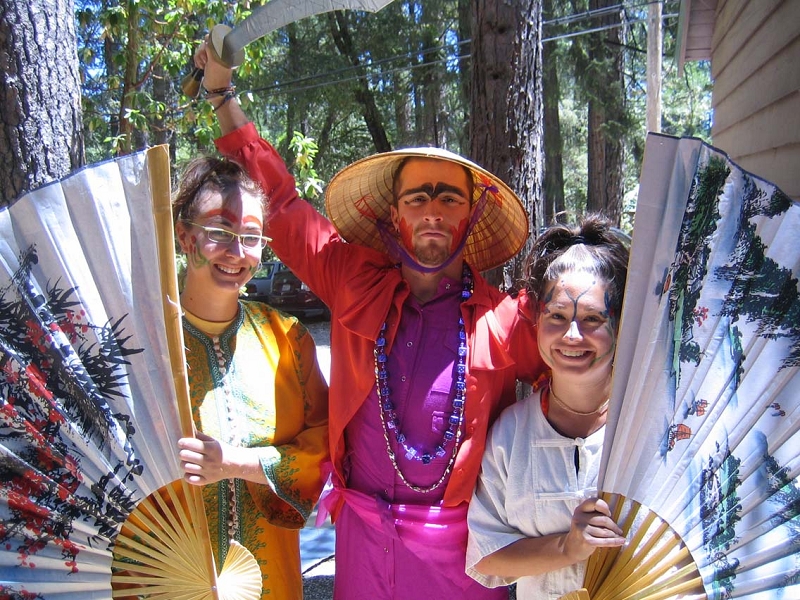
Campers encounter new skills, environments, ideas, and perspectives. Curiosity opens doors to learning, empathy, and creativity.
Why this matters at camp: Growth accelerates when life feels vivid, engaging, and expansive.
A mindset/habit of gratitude is fed when we actively notice and name what is working, what is generous, and what is beautiful. At camp, we are surrounded by those things, and by people to ‘celebrate’ them with. Cultivating gratitude cultivates happiness.

Gratitude strengthens connection and reminds us that growth happens within support. And it’s a life skill that keeps on giving.
Why this matters at camp: Gratitude is simply a powerful well-being tool, and we model it at camp, where there’s a lot to be grateful for.
For the growth of young adults – especially teens – ‘cool’ is a debilitating disease. It stops a person from following their passions in a given moment, expressing themselves fully, and trying new things. This ‘wall’ in our culture is built and maintained by media, social media, peer behavior, and more. Spent much time around a 5 year old? And then a 25 year old? What happened?

Camp tears down the wall celebrating the wacky and awkward, and the person behind it. We model authenticity and play – for all ages. Our Wall of Cool philosophy celebrates individuality and the courage of “weird” among a youth dominated by “cool.”
Why this matters at camp: What we celebrate shapes who we become. “Be the Funk you want to see in your Neighborhood”
If you haven’t already seen it, check out the piece on WWS from this other page. It is a huge value and philosophy at camp! And you can see it everywhere.
WWS is that “extra stuff” that you feel everywhere at Augusta. When you’re ‘just eating lunch’ and the kitchen crew spontaneously erupt in a banana magic wand battle. Or when you look overhead at the person you see ziplining and happen to find out that they’re wearing a rocketman costume.
Wish, Wonder, and Surprise is a deeply cherished metaphilosophy that says “Life is wonderful and sacred, and the day is full of moments that can reverently uplifted with imagination, levity, and awe.”
Leadership at Camp Augusta is intentional and values‑driven. Through Conscious Leadership Group frameworks such as VVH‑CCC, staff are encouraged to lead with awareness, humility, and care.
Conscious Leadership’s core mission is to help people move from leading out of fear and defensiveness to leading with curiosity and “radical responsibility.”
Camp explicitly integrates many of CLG’s concepts—most notably the 15 Commitments of Conscious Leadership.
Why this matters at camp: Campers and staff learn leadership not from lectures, but from example.