
Growth by Design, Not by Accident
Camp Augusta isn’t built on trends or guesses. It’s grounded in developmental psychology, educational research, and 35+ years of evidence-based practice.
- Led by a PhD in Social Psychology, with a concentration in Developmental
- 35+ years of camping research & practice
- Draws from NVC, CBT, REBT, frameworks
- Zero punishment, reward, or guilt-based guidance
- Connected to Prescott College scholarship
Most camps promise fun. Some promise learning. We promise something deeper: developmentally appropriate growth experiences designed by people who understand how humans actually change.
Camp Augusta’s program isn’t designed around “what kids like” or “what’s always worked.” It’s designed around research on emotional intelligence, resilience, intrinsic motivation, healthy risk-taking, and community dynamics.
Our director holds a PhD in developmental psychology, with additional social and organizational psychology. Our staff exceed excellence among camps and are trained in evidence-based frameworks for behavior guidance, communication, and mentorship. Every element of camp—from how we wake campers up to how we handle conflict—stems from understanding how children grow.
This page breaks down the developmental approach that makes Augusta different: the science behind our methods, the frameworks we use, and what this means for your camper’s experience. It’s a particularly meaningful aspect of what makes us unique.
Grounded in Research, Proven in Practice
Camp Augusta draws from multiple research traditions and evidence-based frameworks:
Emotional Intelligence (EQ) Research
The ability to recognize, understand, and manage emotions—in oneself and others—is more predictive of life success than IQ. We explicitly teach and model EQ skills.
Key frameworks:
- Nonviolent Communication (NVC) – Marshall Rosenberg’s model for compassionate, need-based communication
- Success Counseling – Drawing from CBT (Cognitive Behavioral Therapy) and REBT (Rational Emotive Behavior Therapy) SC helps children identify thoughts, feelings, and values
- Conscious Leadership – Self-awareness and responsibility-based leadership
Motivation & Learning Theory
Research shows intrinsic motivation (doing something because it matters to you) creates deeper, more lasting change than extrinsic motivation (rewards, punishment, praise).
We design around intrinsic motivation:
- Activities are chosen by campers, not assigned
- Achievement comes from real skill development, not gold stars
- Behavior guidance focuses on values and impact, not rules and consequences
There’s a lot of philosophy behind what we do.
You can learn a lot about some of the philosophies we use here:
Positive Youth Development
Rather than focusing on “fixing problems,” the Positive Youth Development framework emphasizes building strengths. The 4-H Study of Positive Youth Development (Lerner et al., 7,000+ youth over 10+ years) identifies the 5 C’s as markers of thriving: Competence, Confidence, Connection, Character, and Caring. Research shows youth who develop these markers demonstrate better academic performance, lower risk behaviors, and stronger mental health. Camp is uniquely positioned to develop all five simultaneously—and Augusta explicitly designs for each one through our activities (competence), achievement systems (confidence), small size (connection), values-based guidance (character), and NVC training (caring).
Community Psychology & Group Dynamics
Anthropologist Robin Dunbar‘s research suggests humans can maintain approximately 150 stable relationships—the cognitive limit for truly knowing people. We cap sessions at 90 campers + 60 staff to honor this threshold. We also draw from Bronfenbrenner’s Ecological Systems Theory (camp exists within broader developmental contexts, hence our Partnering with Parents work) and research on consensus decision-making showing individuals are more committed to decisions they help shape. Our small size, flat hierarchy, and participatory structures aren’t aesthetic choices—they’re evidence-based design for healthy community formation.
The Result
Camp Augusta isn’t run on intuition alone. We can articulate why we do what we do, backed by research and refined through decades of practice.
Stretching Beyond the Familiar
One of Augusta’s core developmental concepts is anti-canalization—and it might be one of the most important broad effects we can have on campers’ lives.
What Is Canalization?
Developmentally, think of a canyon with high walls (culture, routine, expectations) guiding water (a person) along a fixed path. The deeper the canyon, the harder it is to change course.
Children live in canyons:
- School routines and social structures
- Family patterns and expectations
- Peer culture and media messages
- Digital environments and screen habits
- The narrow definition of “who they are”
These canyons aren’t bad—they provide stability. But they also limit. Children begin to believe:
- “I’m not athletic”
- “I’m shy”
- “I’m not creative”
- “I can’t make friends easily”
- “This is just how I am”
Anti-Canalization: Shaking Up the Canyon
When people travel—especially to very different places—they experience anti-canalization. The canyon walls loosen. New ways of being become possible. They discover: “Oh, I can be different than I thought.”
Camp Augusta is designed as an anti-canalization experience.
We intentionally create conditions that shake up children’s normal patterns:
Physical Environment:
- Living in open-air cabins among old-growth forest
- No electricity except flashlights
- Sleeping under stars
- Swimming in waterfalls, not pools
- Candlelight instead of screens
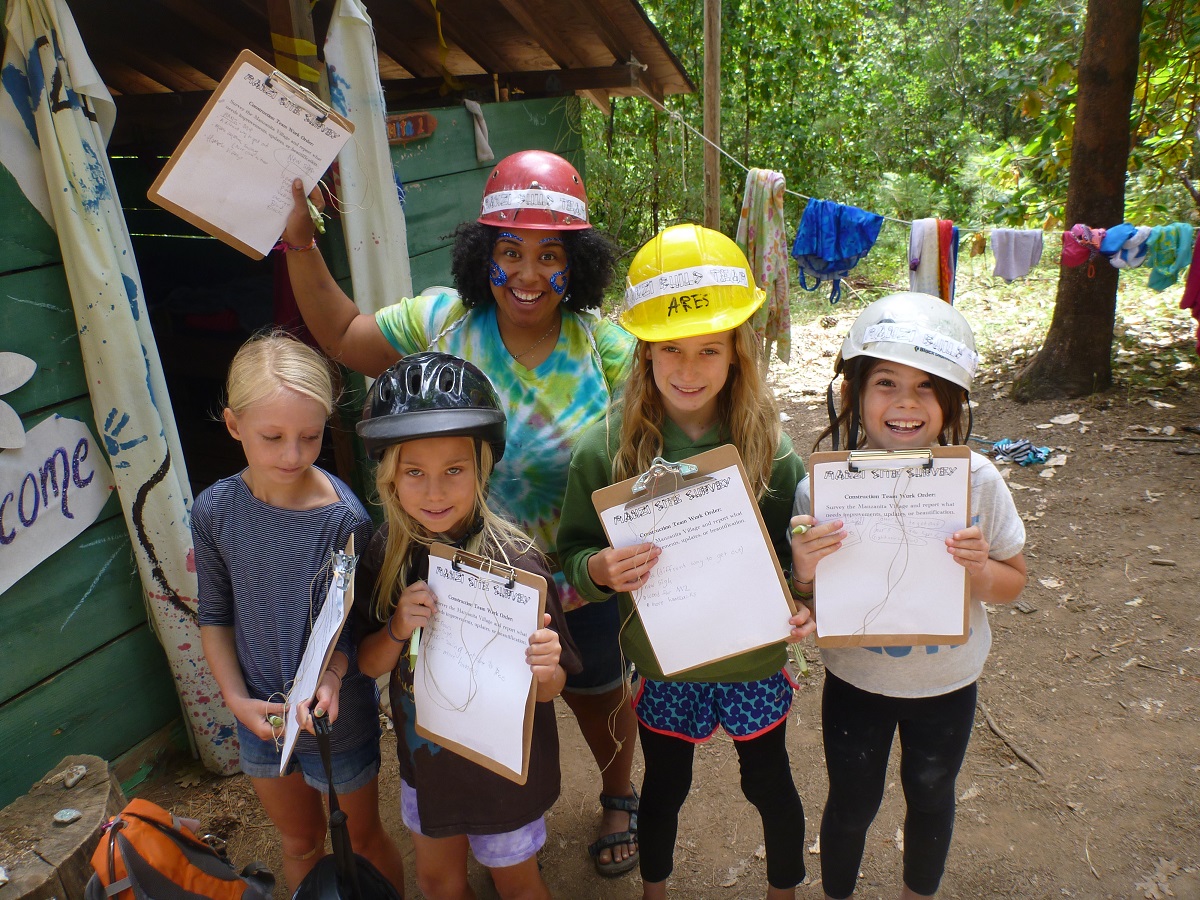
Social Environment:
- New people who don’t know your history
- Staff who see your potential, not your past
- Cabin mates who become family
- Community of 90, not 900
- Everyone get to contribute (CAPP, dishes, cabin care)
Daily Rhythms:
- Special Wakeups every morning (creative, surprising, varied)
- Cabin Activities driven by “what if we could do anything?”
- Evening Programs as immersive adventures
- Evening Embers for contemplative reflection
- Constant exposure to Wish, Wonder, Surprise
See the full flow of a day here.
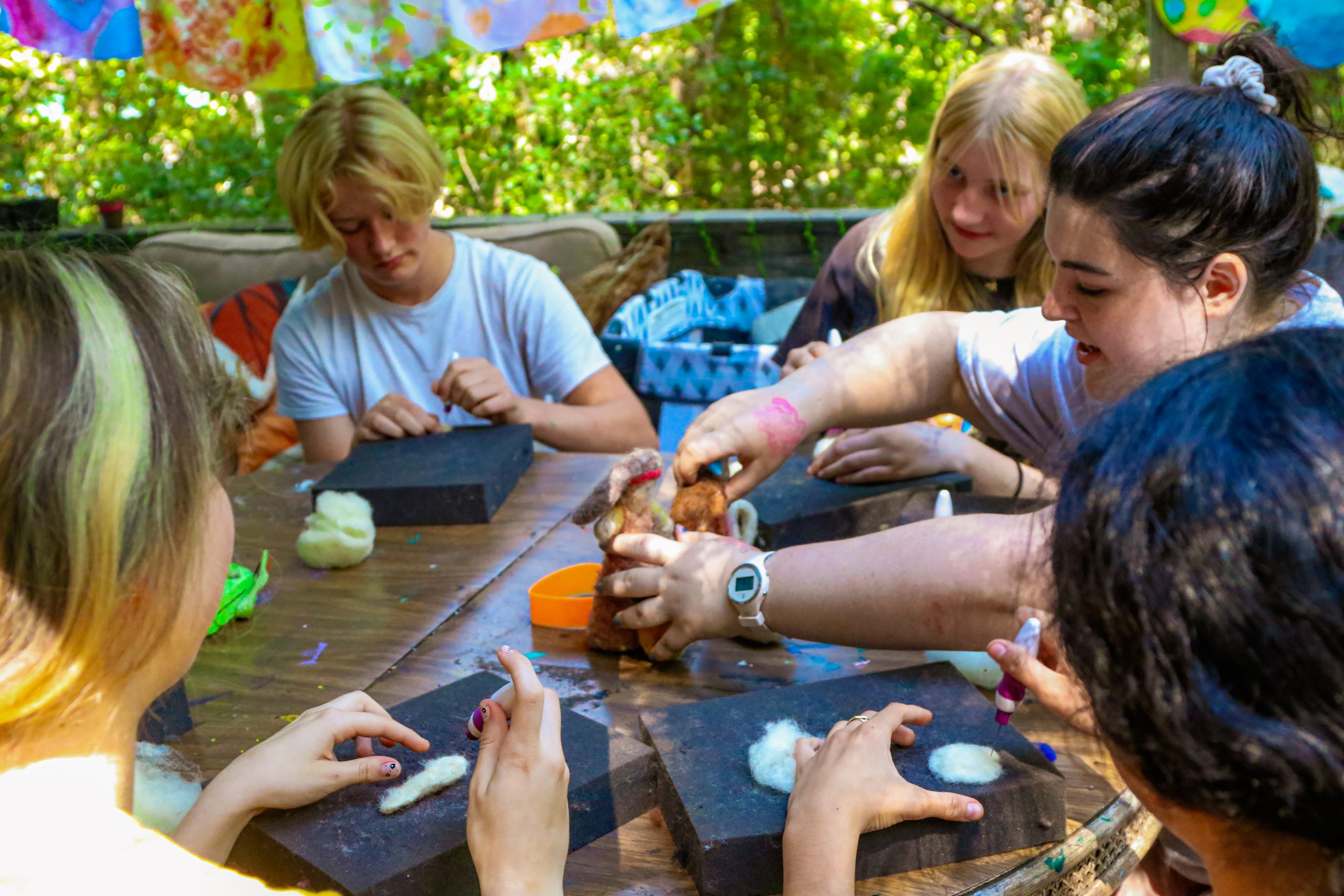
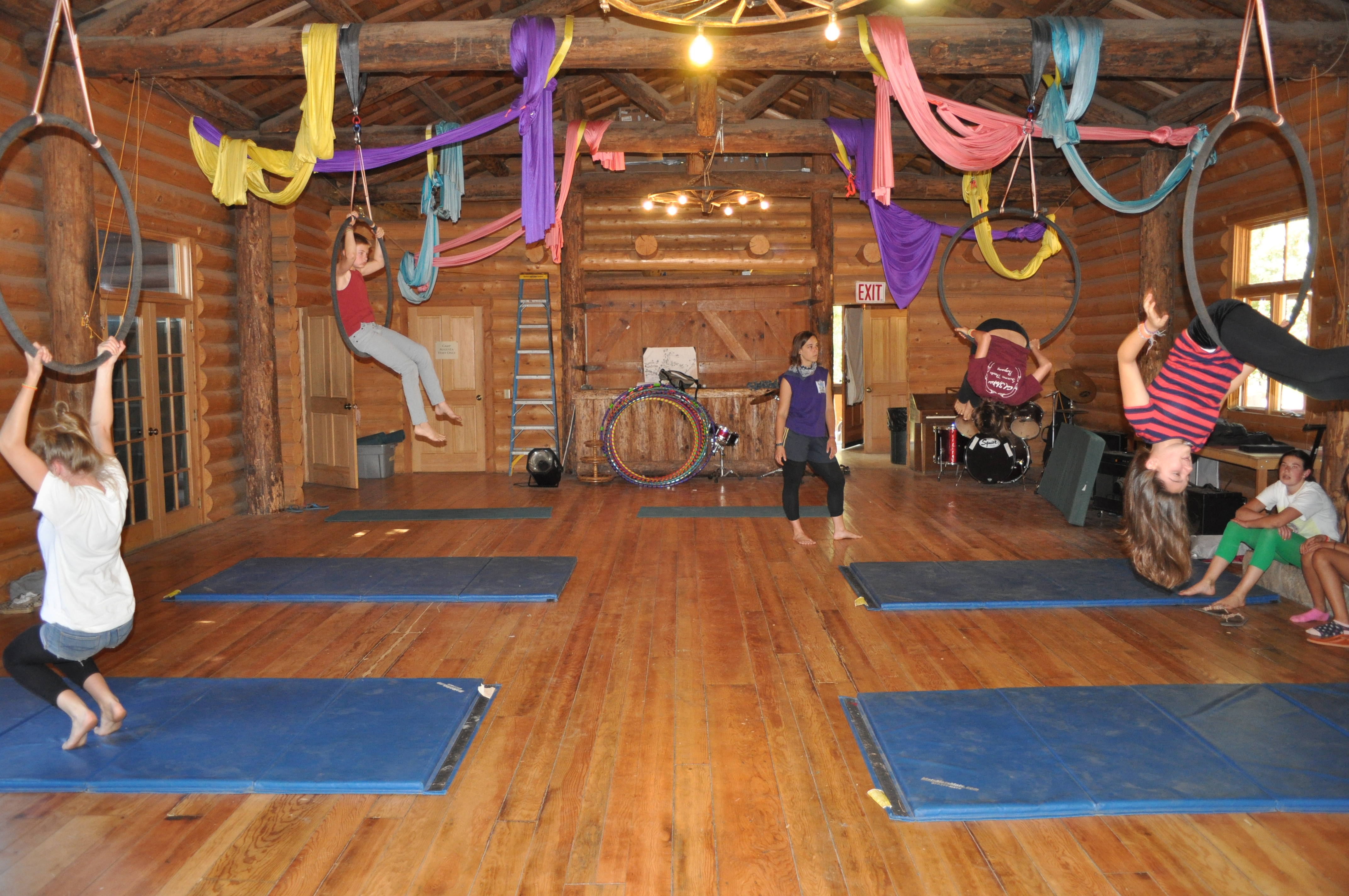
Challenge & Novelty:
- 150+ activities, most never tried before
- Daily choice in what to explore
- Safe place to fail without grades or permanent records
- Living with people you don’t initially like
- Being away from family safety nets
What Anti-Canalization Creates:
When the canyon walls loosen, children discover:
- “I thought I wasn’t athletic, but I love archery”
- “I thought I was shy, but I led our cabin activity”
- “I thought I needed my phone, but I don’t miss it”
- “I thought I couldn’t handle being away from home, but I can”
- “I thought this was ‘just who I am,’ but maybe I can change”
- “I thought I had to be ‘cool,’ but it feels better to be myself.
This is growth at the identity level—the deepest, most transformative kind.
Two weeks intensifies this effect. One week provides a taste; two weeks allows campers to settle in to a new way of being.
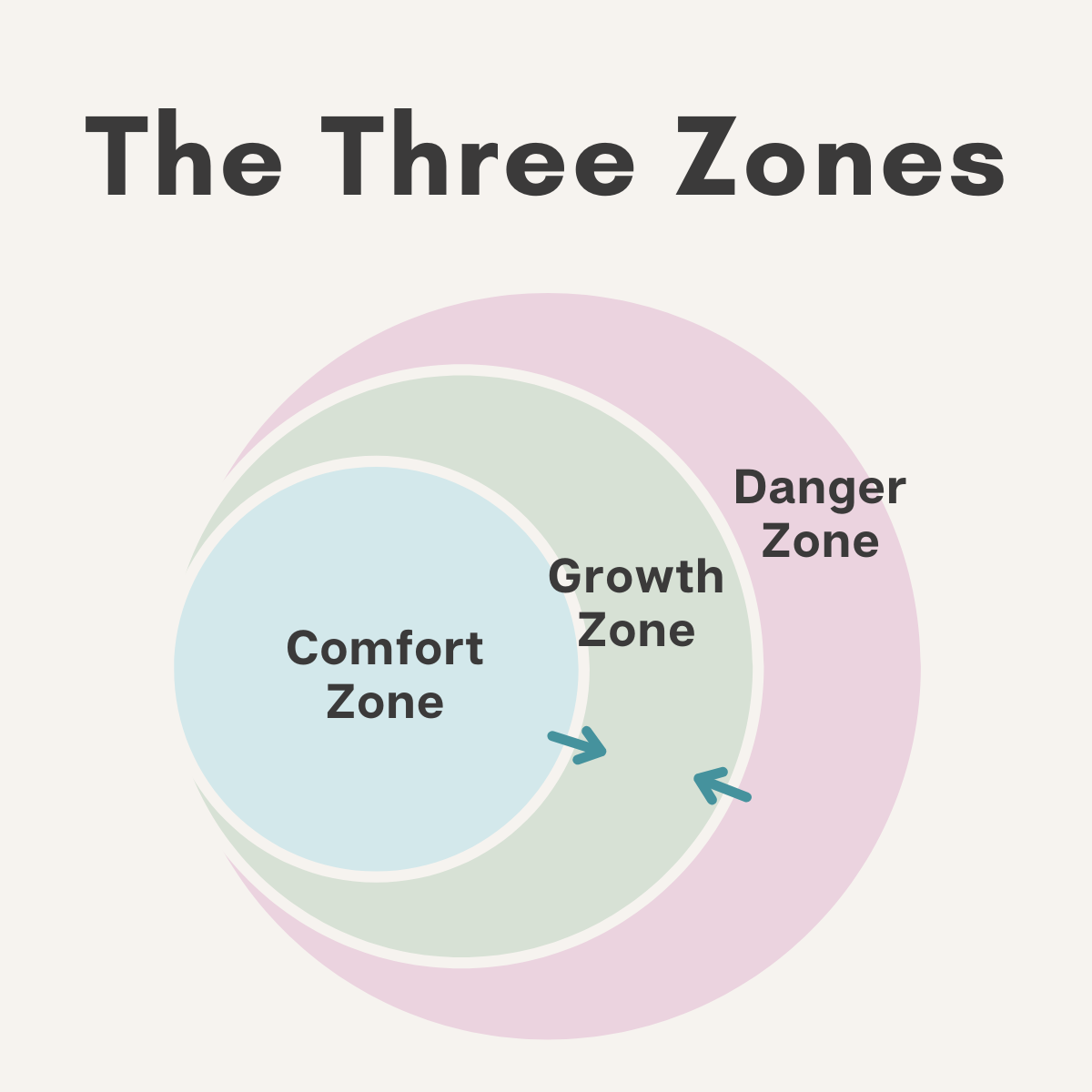
The Three Zones: Comfort, Growth, and Danger
We never push campers beyond their readiness. But we create conditions where they often surprise themselves.
Our Approach:
We never push campers into their panic zone.
Instead, we:
- Offer encouragement to step into the growth zone
- Provide support and safety systems
- Let campers set their own limits
- Celebrate stretching, regardless of outcome
- Validate when something feels too big
COMFORT ZONE (Inner Circle):
- What feels safe and familiar
- Less learning or growth happens here
- Important for rest and recovery
- But not where transformation occurs
GROWTH/CHALLENGE ZONE (Middle Circle):
- Feels uncomfortable but manageable
- Mild anxiety, but also excitement
- This is where learning happens
- Requires support and encouragement
- Builds competence and confidence
DANGER/PANIC ZONE (Outer Circle):
- Overwhelming fear or anxiety
- Fight/flight/freeze activated
- Less learning happens here
- Can create trauma or shutdown
- Must be avoided
Example Scenarios:
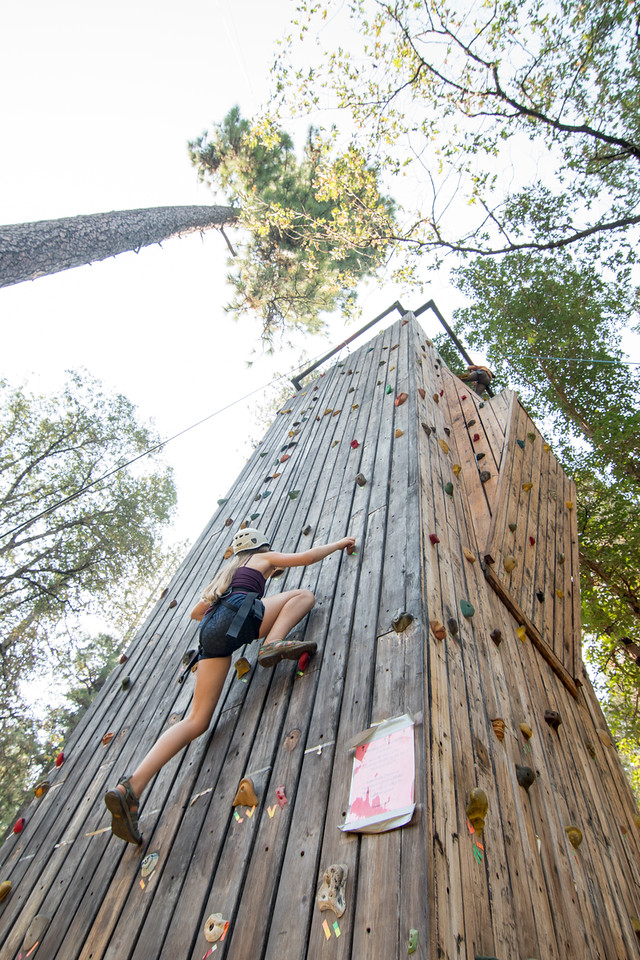
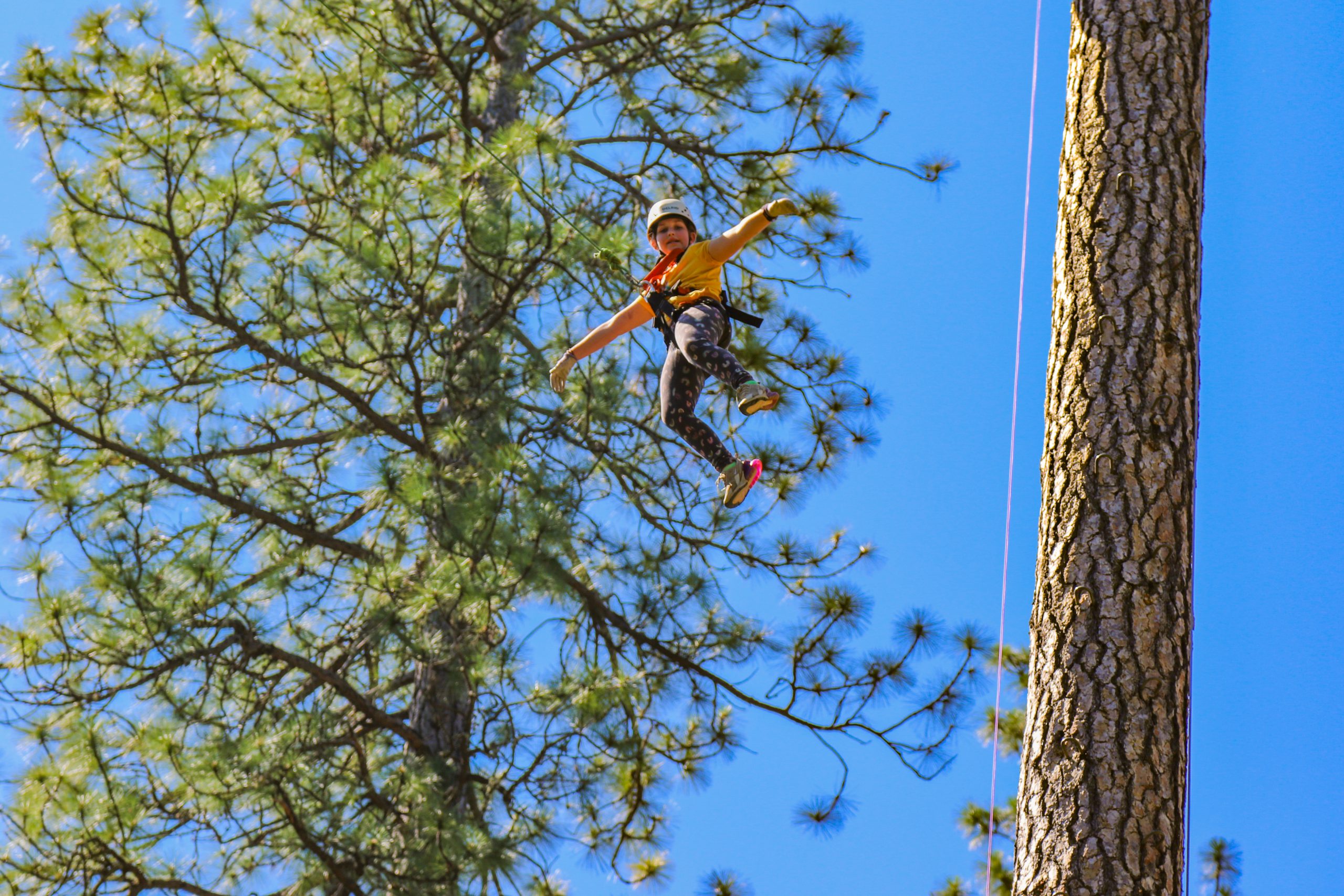
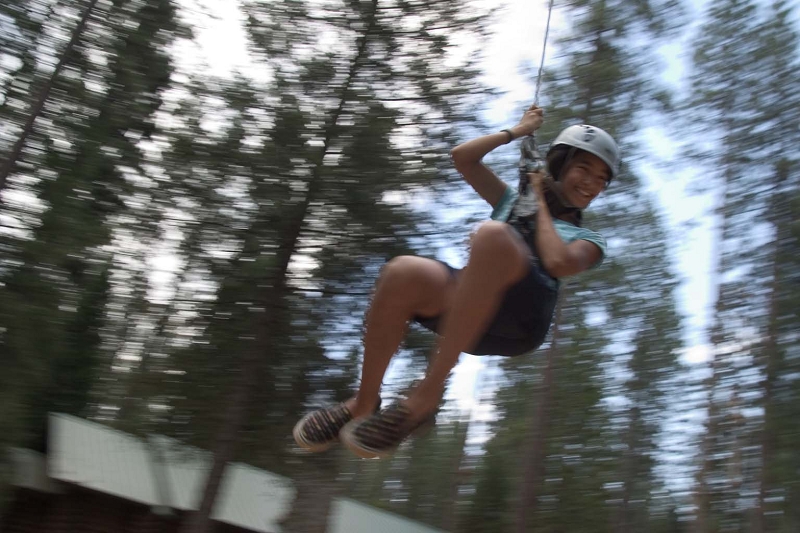
Camper on Giant’s Swing only wants to go halfway up:
- ❌ DON’T: Join in shouting “Go higher!” or keep pulling them up
- ✅ DO: Ask the group to offer support, not pressure. Ask the camper directly: “What height feels right for you?” Let them choose. Celebrate their choice.
- Result: The camper may only go halfway—but that may be higher than they originally intended. They’ve reached a personal goal and learned to trust their judgment.
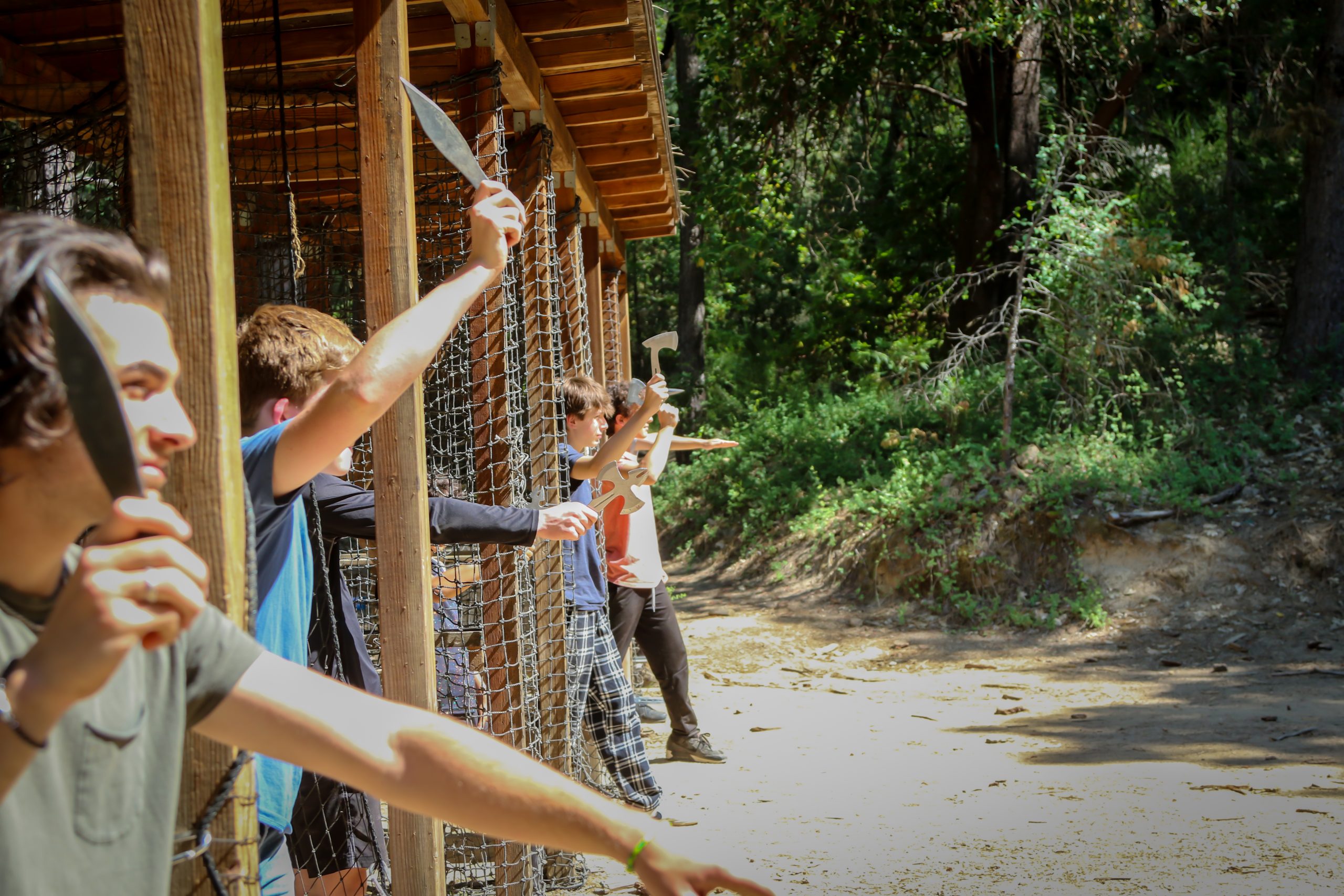
Camper at throwing range achieves their goal, now just wants to have fun:
- ❌ DON’T: Push them to keep leveling up or allow peers to pressure them
- ✅ DO: Celebrate their achievement. Explain what the next level offers. If they just want to enjoy the activity, that’s great too.
- Result: Not all campers care about levels and bracelets. We offer possibility, not dogma.
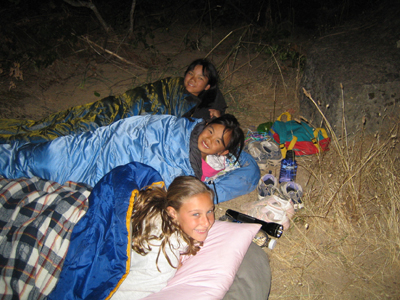
Camper doesn’t want to do the cabin overnight:
- ❌ DON’T: Force participation or allow bullying from cabin mates
- ✅ DO: Explore their reasons. Explain the benefits. Acknowledge their choice matters, while also discussing group decisions.
- Result: Usually campers participate when they feel respected, not coerced. If they truly can’t, alternatives exist.
When Challenge by Choice Doesn’t Apply:
Some things aren’t choices because they’re essential to safety or wellbeing:
- Safety protocols (belay commands, swim tests, etc.)
- Eating (campers need nourishment)
- Hygiene (washing, brushing teeth)
- Sleep (everyone needs rest)
- Three-person rule (camp safety policy)
But even here, we explain why rather than just enforcing rules.
The Deeper Lesson:
Challenge by Choice teaches children:
- They can trust their own judgment about their limits
- It’s okay to say no—and okay to say yes
- Growth happens when they choose to stretch
- Adults will support them, not pressure them
- Courage looks different for everyone
This is agency development—and it’s foundational to healthy development.
Building Lasting Motivation from Within
Camp Augusta is not part of the “high self-esteem” movement that praises children just for existing.
We believe in something deeper: internal motivation built on real competence, authentic challenge, and values alignment.
The Problem with External Motivation:
Many camps (and schools, and families) rely on:
- Rewards: “Great job! Here’s a prize!”
- Punishment: “You did that wrong. No dessert.”
- Guilt: “I’m disappointed in you.”
- Praise: “You’re so smart/talented/amazing!”
Research shows these create shallow, short-term compliance—and often backfire:
- Children do things for the reward, not because they matter
- When rewards stop, motivation disappears
- Praise for traits (“you’re smart”) makes children avoid challenges that might disprove it
- Guilt and punishment create shame, not growth
Our Approach: Internal Motivation
We create conditions where children are motivated by:
- Genuine interest: Activities are intrinsically engaging
- Mastery: Leveled systems allow real skill progression
- Values alignment: “I do this because it matters to me”
- Authentic achievement: Success comes from real effort, not gold stars
In Practice:
Activities:
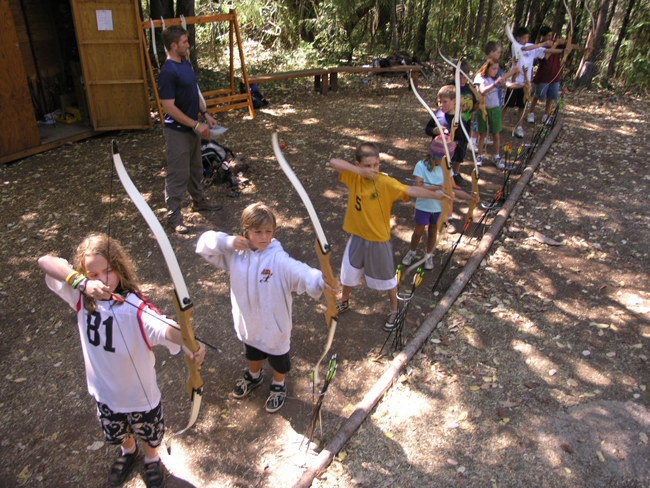
- Campers choose what they want to try
- Achievement is measured by real skill development
- Opportunity & Challenge: We keep challenges present, interesting, and manageable
- No participation trophies—but celebration of genuine effort and growth
Behavior Guidance:
- We don’t punish, reward, guilt, or “buddy approach” (“do it because we’re friends”)
- We use Success Counseling to help children connect actions to values
- We ask: “What kind of person do you want to be? How do your choices align?”
- We help children experience the intrinsic consequences of their choices
Feedback:
- We avoid empty praise (“Good job!”)
- We offer specific, educational feedback: “I noticed you kept trying different techniques until you found one that worked. That’s persistence.”
- We acknowledge effort and process, not just outcomes
The Result:
Over time, children learn from camp:
- “I can do hard things when I care about them”
- “I don’t need a prize to feel good about achievement”
- “I choose my actions based on who I want to be”
- “My mistakes teach me—they don’t define me”
Teaching the Skills That Matter Most
IQ matters. But research increasingly shows emotional intelligence (EQ) is crucial in predicting life success, relationship quality, and wellbeing.
EQ includes:
- Recognizing and naming emotions in yourself
- Understanding what triggers those emotions
- Managing emotions constructively
- Recognizing emotions in others (empathy)
- Navigating relationships skillfully
These skills can be taught. And camp is the perfect place to do it.
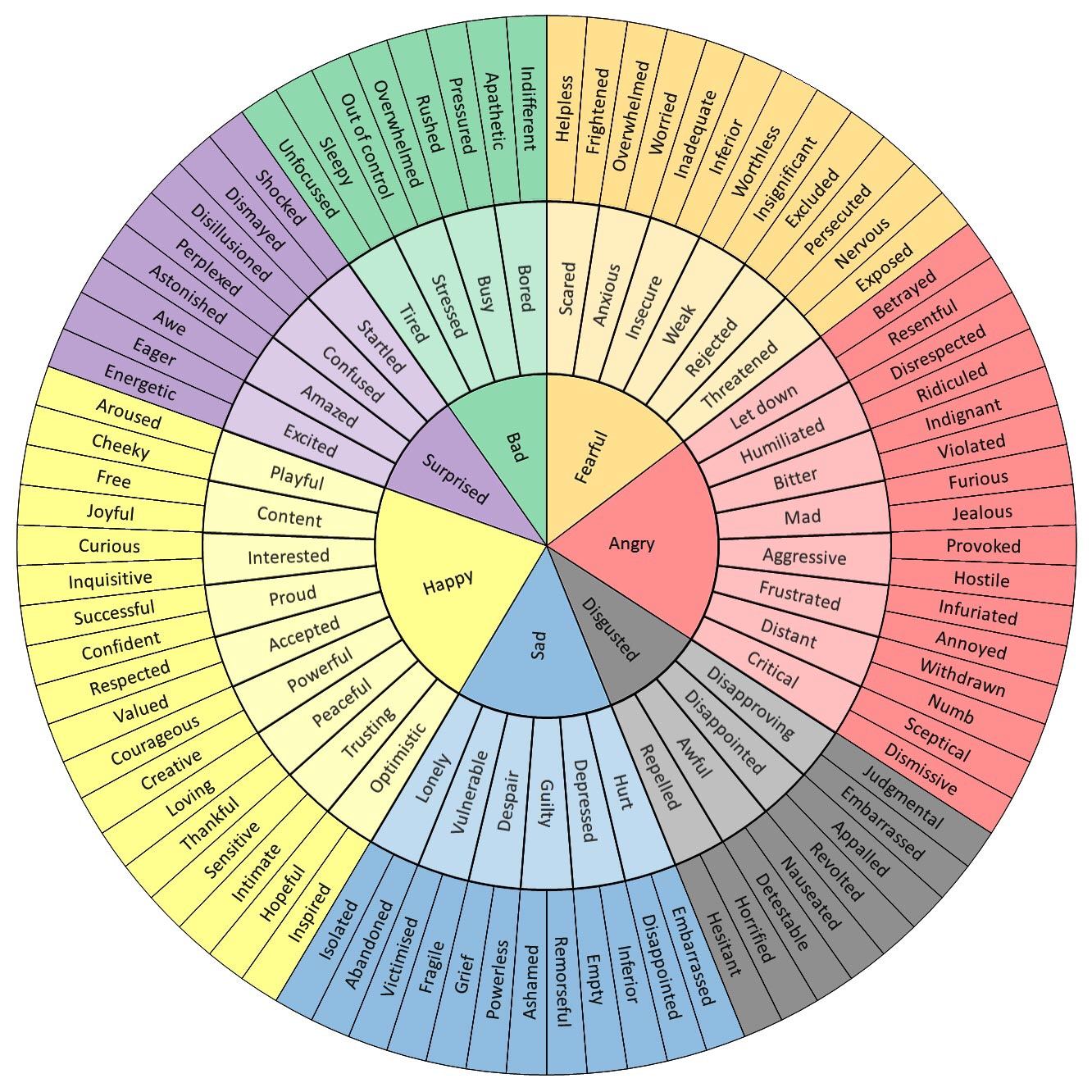
How We Teach EQ:
Nonviolent Communication (NVC):
A framework for expressing needs and feelings without blame:
- Observation (what happened)
- Feeling (how I feel about it)
- Need (what I need)
- Request (what would help)
Example: “When you interrupted me during embers (observation), I felt frustrated (feeling) because I need to feel heard (need). Would you be willing to let me finish before sharing your thoughts? (request)”
Success Counseling:
When challenging behavior arises, we use a framework that:
- Connects with the person’s experience (empathy first)
- Helps them identify thoughts, feelings, and needs
- Explores values and who they want to be
- Co-creates solutions aligned with those values
- Supports accountability without shame
Reflect, Reframe, Validate (RRV):
A technique for de-escalation and connection:
- Reflect: “It sounds like you’re feeling…”
- Reframe: “I wonder if what you’re needing is…”
- Validate: “That makes sense because…”
Evening Embers:
Nightly cabin conversations where children practice:
- Sharing feelings and experiences
- Deep listening without fixing
- Empathy and perspective-taking
- Reflection and meaning-making
Modeling
Our extensively trained staff model EQ. Staff name their own emotions, express needs directly, repair when they make mistakes, and demonstrate vulnerability and courage.
What Children Learn
- “Feelings are information, not good or bad”
- “I can feel angry and still choose how I respond”
- “When I express my needs clearly, people can help meet them”
- “Other people’s behavior often comes from unmet needs”
- “Conflict can be an opportunity for understanding, not just winning”
These skills transfer far beyond camp—to school, family, friendships, and eventually work and relationships.
Mistakes as Learning, Not Defining Moments
In school, failures follow you. Bad grades go on transcripts. Social mistakes become reputations. Children learn to avoid risk and play it safe.
At camp, failure is different.
Why Camp Is Safe:
No Permanent Records:
- No transcripts, no grades, no college applications
- Mistakes here stay here
- You get to try again tomorrow
- Fresh starts are possible
Short Time Frame:
- Even a really hard week ends
- Two-week sessions offer time to recover and rebuild
- No one remembers that awkward moment from Week 1 by Week 4 at home
Supportive Community:
- Staff trained in empathy and growth mindsets
- Peers learning alongside you
- Culture that celebrates trying, not just succeeding
Low Stakes:
- Missing the target in archery doesn’t matter
- Falling off the climbing wall is expected
- Not making a friend on day one doesn’t doom your session
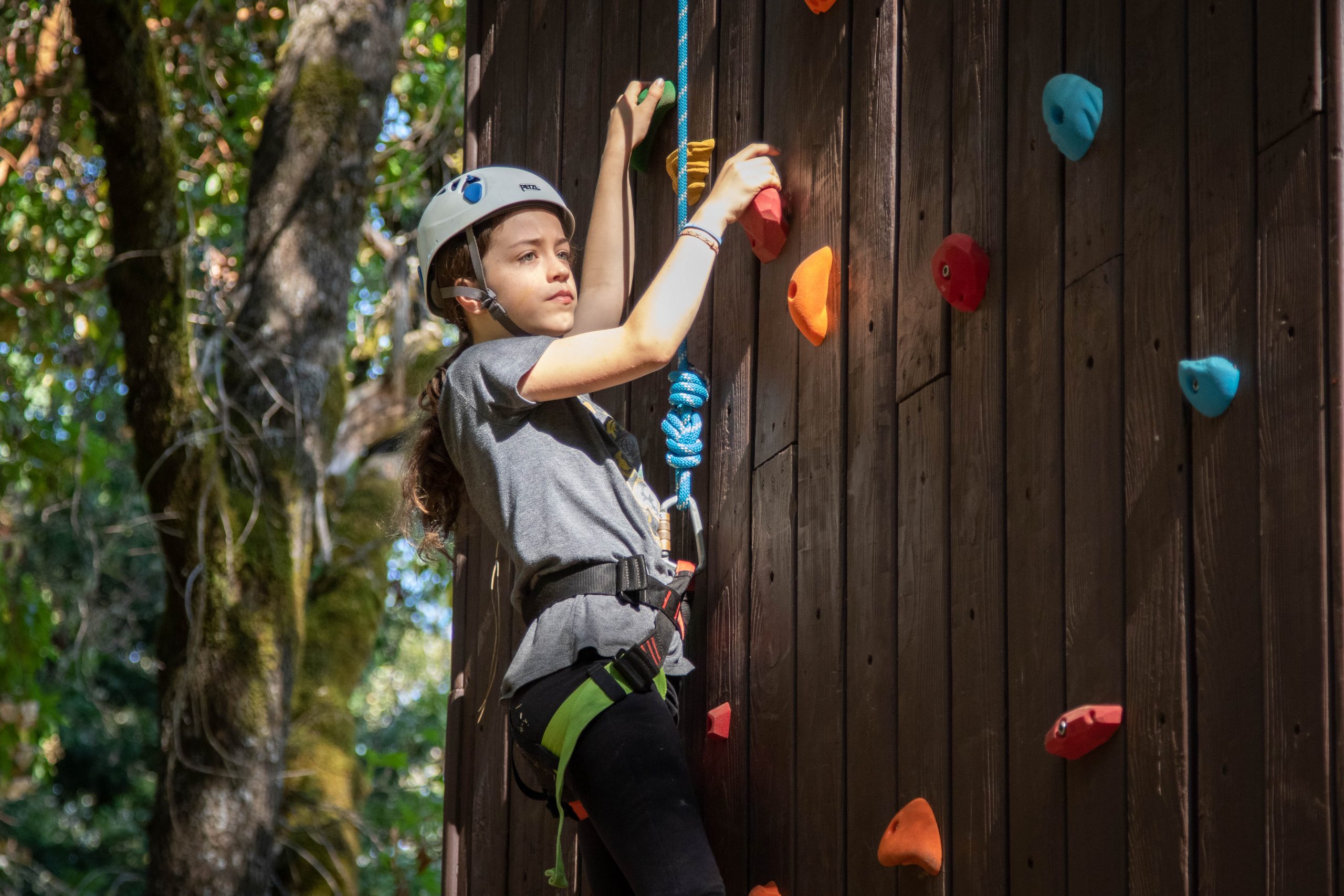
How We Support Failure as Learning:
Language Matters:
- “You haven’t figured it out yet” (growth mindset)
- “What did you learn from this attempt?”
- “Mistakes are how we learn—what will you try differently?”
Success Counseling Approach: When behavior mistakes happen:
- Focus on future choices, not past mistakes
- “Who do you want to be? How will you get there?”
- No shame, guilt, or defining someone by their worst moment
Celebrating Effort:
- Acknowledge trying, not just succeeding
- “You kept coming back to this even when it was hard”
- Process matters more than outcome
Children at camp learn to build resilience. They understand from experience how to handle disappointment, that setbacks don’t define them, that they can learn from their failure, and that worth isn’t based on achievement.
The Long-Term Impact: Children who experience failure as safe and informative become adults who take healthy risks, innovate and create, bounce back from setbacks, and don’t let fear of failure paralyze them.
This might be one of camp’s most important gifts, and it’s subtly baked into every part of camp life.
Development in Action
All of this—the anti-canalization, the challenge by choice, the internal motivation, the EQ training—translates into concrete experiences for your camper:
Daily:
- Woken creatively, disrupting routine expectations
- Choosing activities that genuinely interest them
- Practicing emotional expression in embers
- Receiving feedback that builds real competence
- Experiencing community where they matter
When Challenges Arise:
- Supported to stretch without being pushed
- Guided through conflict with EQ tools
- Helped to learn from mistakes, not be defined by them
- Encouraged to connect actions to values
Over Time:
- Discovering new capacities (“I didn’t know I could do that”)
- Loosening limiting stories (“Maybe I’m not ‘just shy’”)
- Building intrinsic motivation (“I want to improve because I care”)
- Developing resilience (“I can handle hard things”)
Long-Term:
The skills practiced at camp transfer:
- EQ tools work at school, home, and in friendships
- Internal motivation serves them in learning and work
- Resilience helps them navigate setbacks
- Expanded self-concept opens new possibilities
This is development as Augusta understands it: not just having fun (though we do), but becoming more fully yourself—capable, resilient, emotionally intelligent, intrinsically motivated, and alive to possibility.
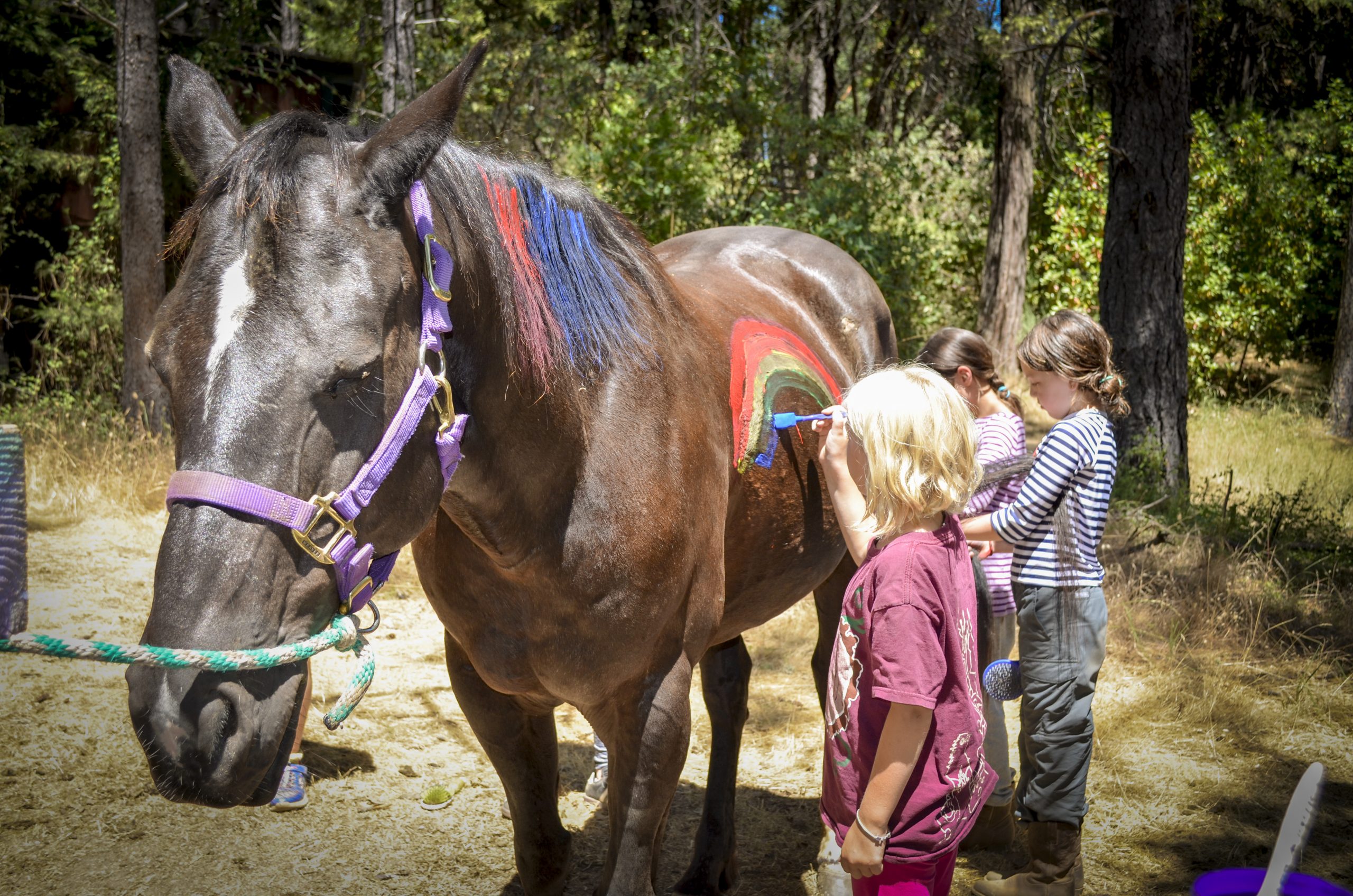
Growth Grounded in Science, Lived in Community
At Camp Augusta, child development isn’t theoretical. It’s practiced every day by extensively trained staff in a community designed around how children actually grow.
We know why we do what we do. We can show you the research. We can explain the frameworks. And we can point to thousands of campers who’ve experienced the transformation that happens when development is taken seriously.
This is growth by design. This is Augusta.