
Wish, Wonder, Surprise

by Randall Grayson, Ph.D
Director, Camp Augusta

“The mind is the voyager of journeys, the center of questioning, the conjurer of fear,
the seed of desire, the door of compassion, the creator of joy.”  – Kirkland

“The fairest thing we can experience is the mysterious.  It is the fundamental emotion
which stands at the cradle of true art and true science.”  – Einstein

“The greatest obstacle to discovery is not ignorance, it is the illusion of knowledge.”  – Boorstein

“We may affirm absolutely that nothing great in the world has been accomplished without passion.”  – Hegel

Imagine

Imagine . . . teleportation.  End of natural death.  Aliens visiting Earth.  The last war.  Fusion as our main source of energy.  Money out of politics.  All of those are fiction, and perhaps they always will be.  Not so long ago, powered flight, electricity, surgery, cars, and computers were also the realm of fiction.  A commonality amongst inventors, social or scientific, casual or infamous, is an active imagination combined with passionate action.  To break that down a bit more, creators of any ilk entreat Wish, open to Wonder, and are readily tickled by Surprise. 
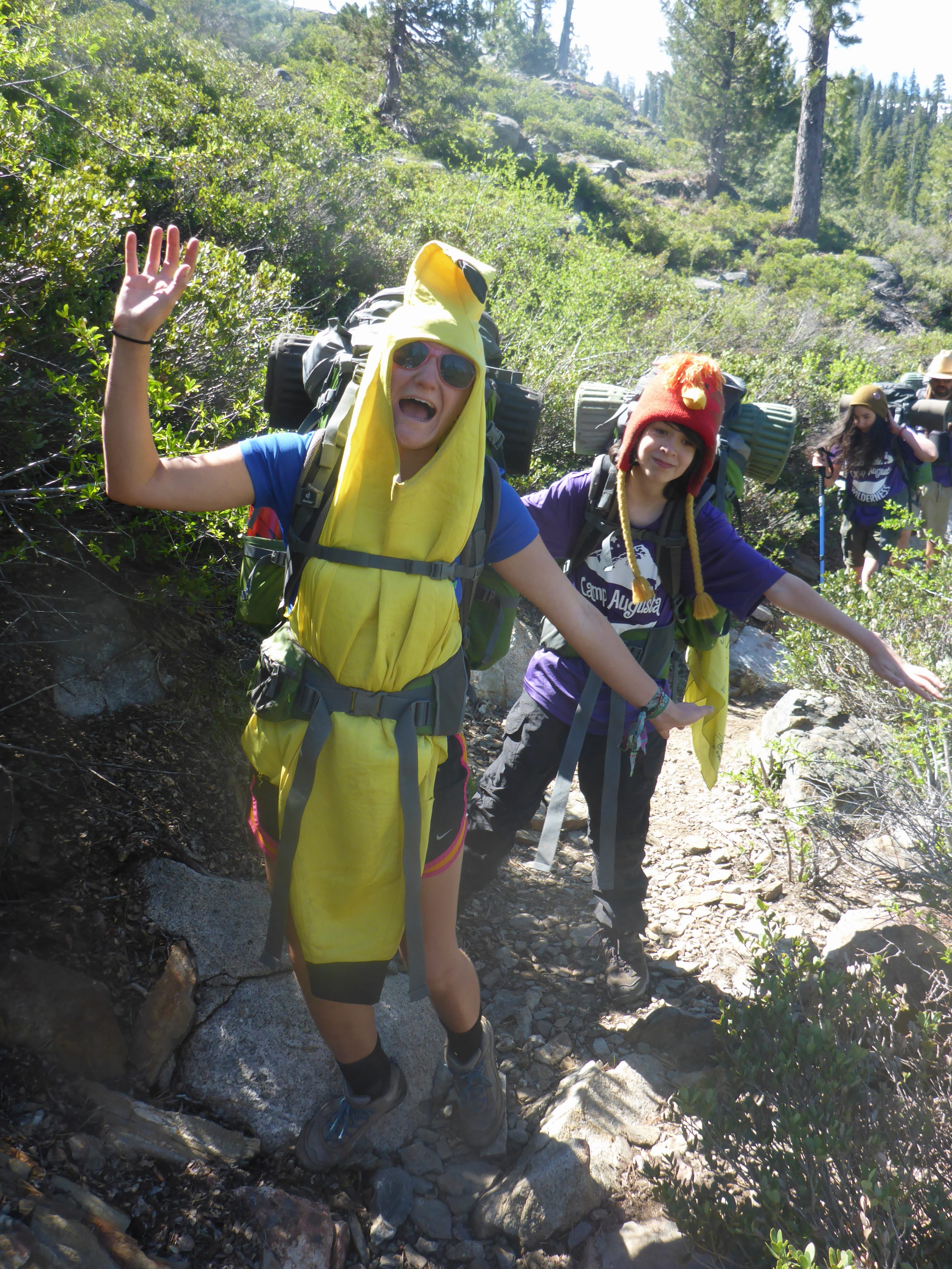
Two hikers, one dressed in a banana costume and the other in a red animal hat, smile and pose playfully on a sunny, rocky forest trail. Other hikers with backpacks are visible in the background.

Stop . . . think . . . when is the last time you had the sensation of your blood rushing, your mind quickening, your eyes brightening, your shoulders rising, and your breathing sharpening?  It is possible it might have been something “passive,” like watching an engrossing movie, reading a book, or watching a sporting event.  Now, when is the last time you felt a passionate Wish, Wondered at something, and were Surprised at the outcome, or your thoughts, that ALSO inspired you to ACT?  I’ll venture to guess that it was something you were actively engaged in, and that your were playfully and energetically engaged in the activity.  Wish, Wonder, and Surprise were likely all sparked.  It’s a pretty cool feeling, and one that I bet we Wished happened more often.

I’ve been asking folks and looking around, and it seems to me that our experience of the nature, intensity, and frequency of Wish, Wonder, and Surprise have changed for the worse.  I definitely do NOT think that there is a dwindling supply of Wishes, that Wonder isn’t plentiful, or that Surprises are doled out in finite quantities at birth.  They are as plentiful to the individual now as they have always been.  But, a thickening of our skin, the cataract-dulling of our eyes, and cacophony of noise has made our senses less acute.  It takes more to “get us going.”  True story:  A thirteen-year-old boy sits slumped on a couch, watching a video about the structure of the universe and the nature of incredible celestial objects.  The drama is interrupted by commercials for Cheetos, Halo 3, and the new BMW convertible.  The boy switches channels for a while, briefly landing on Simpsons’ re-runs, gets up to grab a Red Bull soft drink, returns briefly to the television, and then switches over to playing the most recent video game.  Alone.

Below are some more common ways I believe children and adults experience Wish, Wonder, and Surprise today.

Children

  • 44 hours of media a week – television, video games, internet, music (Kaiser Family Foundation).  These things feed the imagination for better and worse.
  • Tooth fairy, Santa Claus
  • School learning environment (presented facts tend to deaden)
  • Amusement parks – often a “conveyer belt” experience, watching/doing something with a pre-determined outcome.
  • Physical sports
  • Dreams, Daydreams
  • Movies / books / magic / theater
  • Rituals and holidays
  • Religion / Spirituality
  • Children’s toys – offer the possibility of experiencing Wish, Wonder, or Surprise, more or less dependent on the type of toy.
  • Coloring books – pre-destined with little variation possible.
  • Observing the natural and manufactured world, with attention, curiosity, and openness
  • Watching the actions of adults
  • Free play – alone or with friends.  (how many hours per week?)

Adults

Hoping for a given outcome, health, job, sports, lottery, or other opportunity/event
  • Watching television shows – interpersonal drama, documentaries, nature shows
  • Internet surfing – from facts to YouTube
  • Going to plays, sports, musical events, festivals and fairs
  • Movies / books / theater
  • Dreams, Daydreams
  • Discourse
  • Birth
  • Dating, love, and commitment
  • Rituals and holidays
  • Religion / Spirituality
  • Watching the actions of children
  • Observing the natural and manufactured world, with attention, curiosity, and openness
  • Structured play – such as board games
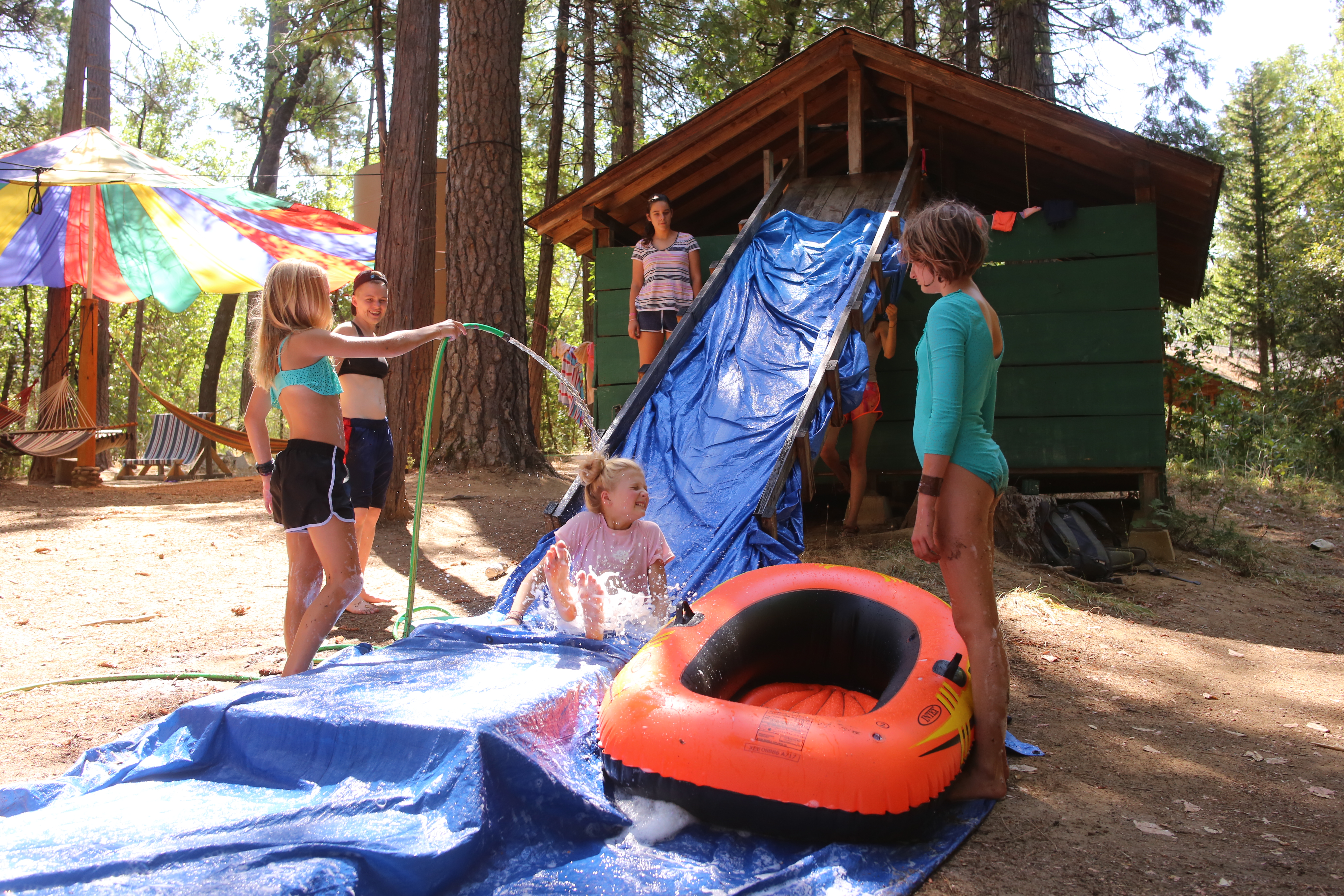
Four children play on a homemade slip-and-slide made of blue tarp outside a cabin in the woods, supervised by summer camp staff. One child sprays water with a hose as another slides toward an orange inflatable raft, while two others watch.

Children at Camp

  • Zero electronic media, including the internet, video games, television, e-mail, texting, cell phones, and movies
  • Learning that is experiential and interactive – no simple presentations of fact
  • Physical sports – often several hours per day, every day
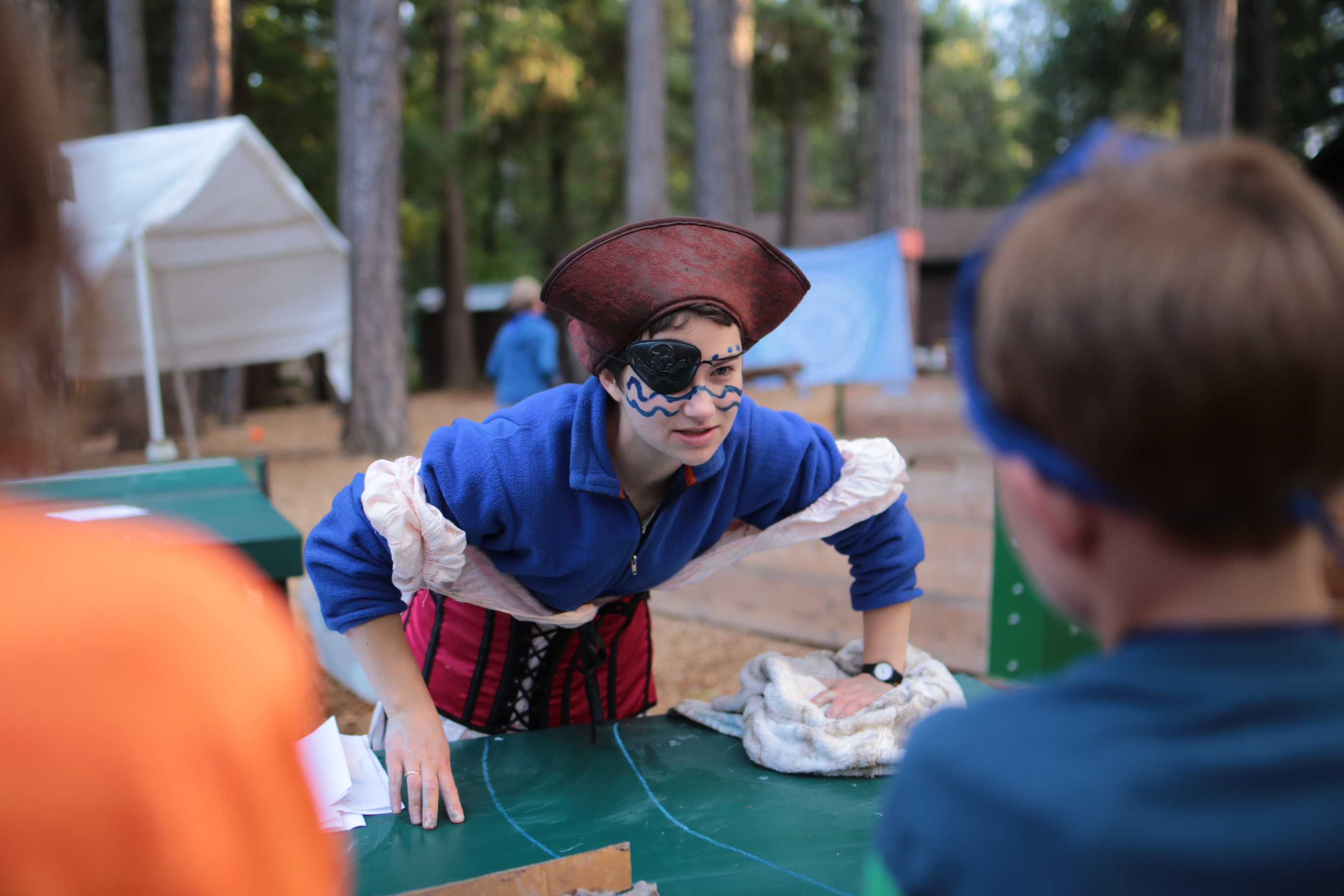
A person dressed as a pirate, with a red hat, eye patch, and blue top, leans over a table outdoors, talking to a child. Tents and trees are visible in the background, suggesting a camp or fair setting.
  • Dreams, Daydreams
  • Crafts without kits – no predetermined outcome.  Unique creations.
  • Theater
  • Interactive theater – improv, audience-participation skits and songs
  • Themed events and all-camp programs where campers are integral and integrated to the event, determining how themselves, small groups, and large groups interact and fare in the event
  • Rituals and traditions
  • Religion / Spirituality
  • Observing the natural and manufactured world, with attention, curiosity, and openness
  • Interactions with a variety of staff, including international staff
  • Discourse – discussions at rest hour, at night, and over meals
  • Free play – daily time to allow Wish, Wonder, and Surprise a blank slate

At camp, Wish, Wonder, and Surprise have a different intensity, frequency, and intentionality.  The philosophy is often that children learn best when they discover truths for themselves.  Children need to explore, create, and challenge.  Feeding children answers and giving them facts deadens their thirst and hunger, their Wonder and Wish, for what is true and possible.  Play is a natural expression of Wish, Wonder, and Surprise.  Play is a tool for learning, and not something given so many minutes during the day.  That play is more pure and inspired when it is free of the digested images and ideas of movies, television, or YouTube.  Through original play, children learn social skills, their passions, and their potential. 

Campers and staff may Wonder at the stars and universe while in a canoe, on the lake, at night.  In the amphitheater, enjoying some hot chocolate with marshmallows, stories are told the old-fashioned way, over a campfire with a single teller weaving his or her tale.  During an evening program, campers may Wonder at the riddles and various tasks that challenge individuals and teams, tapping their physical and mental abilities.  A camper may Wonder at how a staff person or camper is able to accomplish feats of physical or creative skill.  After placing dye on a folded piece of fabric, a camper may Wonder at how the finished piece will turn out, waiting until the next day to find out.  A camper may look at his/her counselor and Wonder how they are able to be free and truly themselves without fear of ridicule or being judged, which is uncommon in most normal environments.

Three people stand outside a lit wooden cabin at night, surrounded by tall trees, gazing up at a star-filled sky. The warm cabin light contrasts with the dark forest and clear, starry night above.

Wish on the first shooting star.  Wish the hand-cranked ice cream won’t be too liquidy.  Wish for a new and delightful friendship in the cabin mates you have yet to meet.  Wish your ceramic pot turns out better than expected . . . things you didn’t think would happen, but when they do, you’re surprised.  Wish to see an Alligator Lizard or American Dipper.  Wish a given counselor returns again next summer.  Wish Lazy Dog would come every day.  Wish for the camp vote for a given program to turn out to be what you wanted.  Wish to make level five in archery, so you can fire a flaming arrow at the Phoenix.

Be Surprised you made it to the top of the Giant’s Junkyard, made the bull’s eye, caught a fish, or made level four in fire spinning.  Surprised with new friendships one wasn’t expecting.  Surprised at the punch line of a silly campfire skit.  Surprised what you’ll find in the mysterious yurt during the all-camp game.  Surprised that trees can provide vitamin C, toothbrushes, and the raw materials to make baskets.  Surprised that YOU were able to make fire with two sticks.  Surprised that a spontaneous “Bop Bop” song started while just hanging out.  Surprised to get caught in a spontaneous water fight.  Surprised that stained glass, sword fighting, and the Giant’s Swing are new activities this summer.   Surprised that The Pirates took the level bracelets, water, chairs, salad bar, clinic signs, or something else for ransom.  Surprised that the tables got turned upside down, the silverware is gone, or a new flag has been hung.  Surprised that a camper caucus created real change.   Surprised how fun a simple life in the woods, in a cabin without electricity, can be.  Surprised that you have more in common with people from different backgrounds than you first thought.

The Difference

Below are some key differences of experiencing and fostering Wish, Wonder, and Surprise at camp.
  • Not a kit.  I’ve seen lots of children play with Lego’s, and they usually make what the kit was designed to, or some variation on that theme.  Lego’s used to be sold in boxes with certain numbers of pieces, instead of kits.  Imagination is checked and framed.  Adults, when they do cook, generally follow recipes; rarely do they examine the cupboards and just create (Iron Chef is a show taking that concept to the next level).  Creative and imaginative thought (Wonder and Wish) are touchstones of actions that make differences large and small – see end piece on Creation.
  • Engaged with whole self – body, mind, heart, and in a group setting.
  • The outcome is unknown.  With rides, books, movies, and traditional theater, there is a singular path that is taken.  Although that path is discovered bit by bit, the imagination is checked by the gutters that keep the ball on the predetermined path.  When campers participate in activities at camp, they influence how it will turn out, and there is room for twists and turns to be created and experienced.
  • Campers get a chance to “go outside and play” and actually answer the “Play what?” question themselves.  Imagination is given as free a reign as possible.
  • Exploration and adventure.  Children’s automatic environments and behaviors are interrupted.
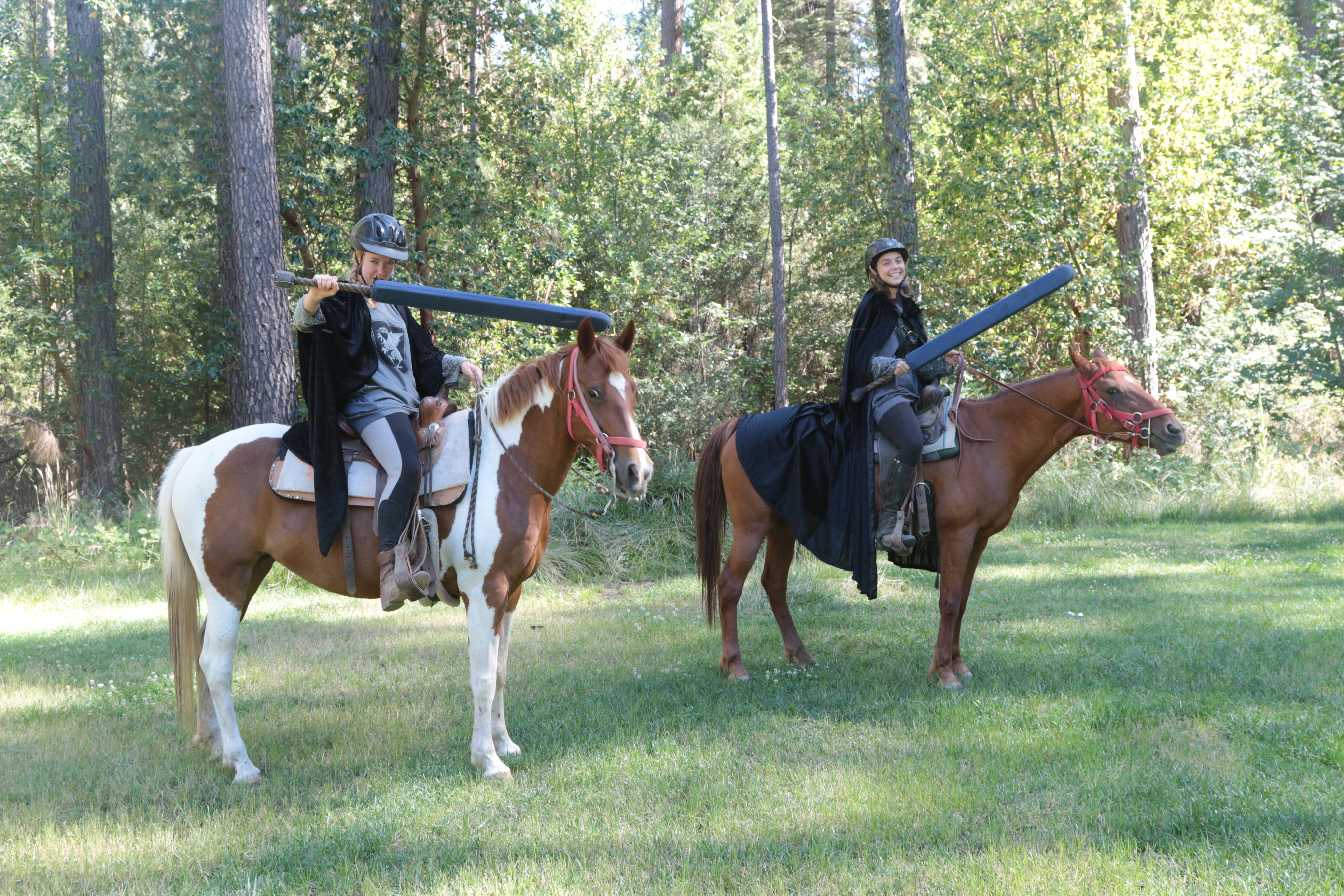
Two people in medieval-style capes and helmets sit on horses in a grassy clearing, each holding a large foam jousting lance. Tall trees fill the background.
  • Failure and success through unfamiliar and unusual risks.  Discovery of themselves.
  • Absence of media – what does Snow White look like?  If your mental image is the Disney one, then you’ve just experienced how media impacts imagination.  Snow White was a book, and the image was the creation of your imagination.  Google Snow White now, and the immediate images that come up under a normal search are the Disney imagines.
  • Equalizer – camp turns down many channels that are turned up very high, and turns up others.  Not an iPod – live voices, live instruments, and you are singing, not just listening.  Nothing happens on a screen – you are always looking into the eyes of another human being, right in front of you.  An instant message is a tap on the shoulder.  All games are interactive.
  • Intense social nature — living on a submarine or in an orphanage would be intensely social, but besides those extremes, camp is the most social environment possible.  In a constant state of being with others, over a longer period of time, campers experience and develop relationships that stretch both the mind and heart, creating a space where Wish, Wonder, and Surprise have more room to stretch themselves.
  • Language of interactive thought.  It has sadly been tried, and we know that it is impossible for a child to learn language from television, even after 13 years of exposure (Genie).  Inspired interaction is the grist for the mill.  Inventions flourish in small groups, which is why Edison had a team in close quarters and Google stresses interactive spaces.  Active, dynamic, pluralistic engagement fosters creative thoughts and endeavors.
  • Be at cause, and not effect.  Campers choose the design of their day, instead of traveling a conveyer belt of activities and events designed by someone else.  Campers exist in an environment where they live without punishment, external rewards, guilt, pressure by cool people or those in authority, and instead find themselves the willing participant in responsibility and far greater choice and power.
A summer camp staff member wearing a helmet swings on a rope toward large inflatable bowling pins outdoors, while others watch in a wooded area with tents in the background.

Ending

  • Wish, Wonder, and Surprise that are experienced, richly and deeply, seems to be more muted and infrequent in children now.  Heard of the Old Order Amish?  They live without electricity, engines, and most modern conveniences.  Their experience is extreme in today’s world, but the extreme makes the point of how their simplicity enhances their sense of Wish, Wonder, and Surprise, and their happiness.  Children today have seen so much, that the spark needed to light a passionate fire is a larger and slowly growing one.  At camp, we want to re-sensitize, re-awaken, re-enliven the mind, heart, and spirits of children, so that the small sparks that are everywhere find fertile tender, and that they may know the joy in Wish, Wonder, and Surprise on a daily basis.  It’s everywhere.
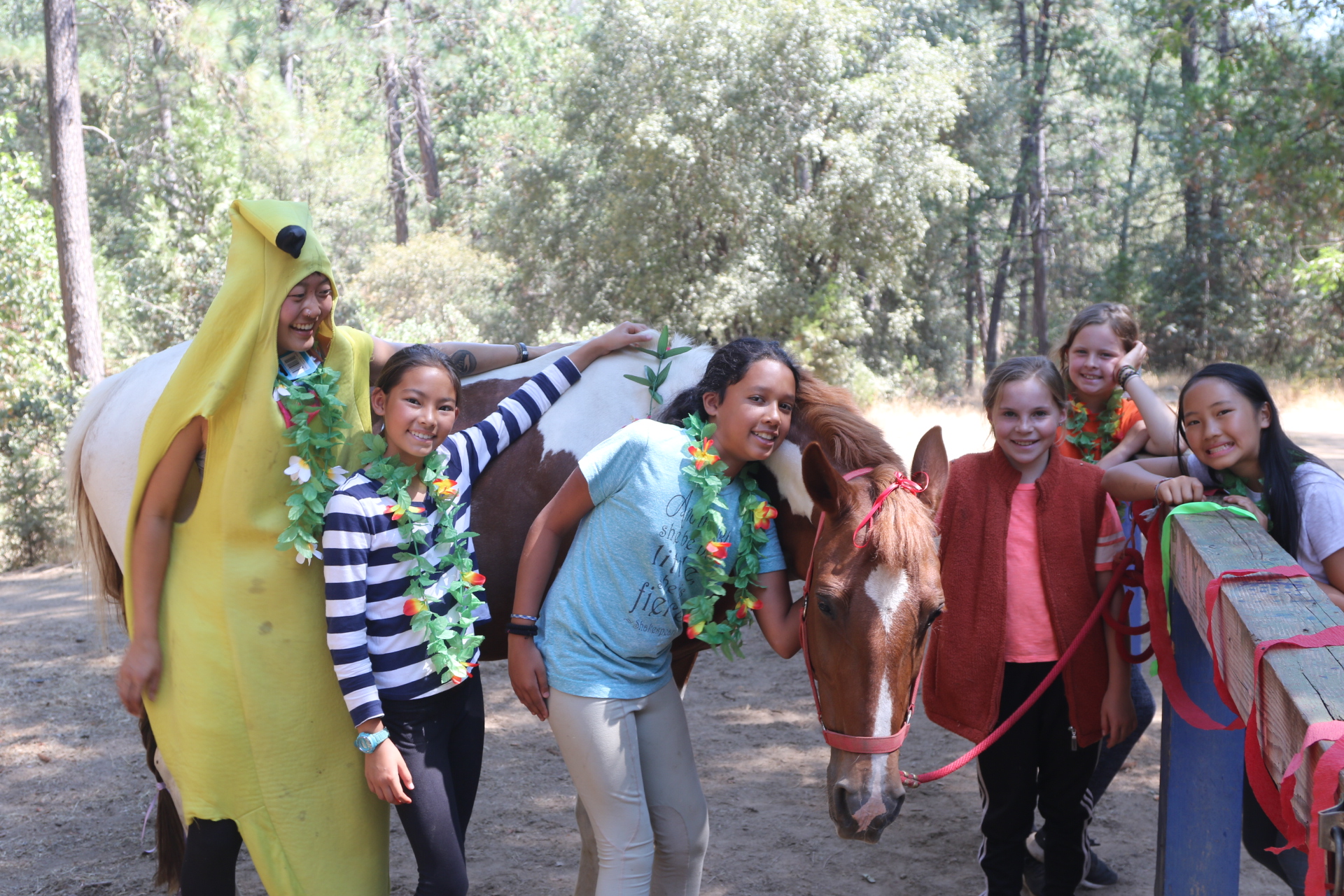
A group of smiling children, joined by summer camp staff, stand beside a brown and white horse in a wooded outdoor area. One child is dressed in a banana costume as others wear colorful leis and pet the horse, enjoying a fun day together.

Ending Quotes

  • Gioia, a poet and the chairman of the National Endowment for the Arts.  http://www.rakemag.com – “The Death and Life of American Imagination”
      • “we’ve pawned off the task of imagination to commercial manufacturers of marketing and entertainment. They feed us an endless stream of stock imagery and flashy distractions—‘content’ that comes predigested and does little or nothing in the way of encouraging us to form our own mental images, ideas, or stories. With this type of passive consumption, a person’s imagination is no less an overfed and undernourished couch-potato than her body.”
      • “By ‘free and unstructured play,’ he means activity that is unencumbered by adult direction, and does not depend on manufactured items or rules imposed by someone other than the kids themselves. He is referring to the kind of play that is not dependent on meddling or praise or validation from well-meaning parents on the sidelines.  Interrupted like being awaked from a dream.”
      • “A child who spends a month mastering Halo or NBA Live on Xbox has not been awakened and transformed in the way that child would be by spending time rehearsing a play or learning to draw.”
  • “If at first the idea is not absurd, then there is no hope for it.”  Albert Einstein
  • “Those who dream by day are cognizant of many things which escape those who dream only by night.”  Edgar Allan Poe
  • “A person’s mind stretched to a new idea never goes back to its original dimensions.”  Oliver Wendall Holmes
  • “Do you know that in a universe so full of wonders, people have managed to invent boredom. Quite Astonishing.” Terry Pratchett, The Hogfather

Wish, Wonder, & Surprise Defined

Wish

The Wish is the movement from the inner world to the outer world, where action is often taken and changes are made. The Wish is a yearning for others, oneself, or something to be different in the expression of a need. Wish extends our self to goals, and we learn to take actions to make our Wishes come true. It requires an exercise of the will combined with imagination. We also hopefully continually learn how to handle the setbacks of vehement Wishes not coming true quickly, and the dedication and emotional reservoir needed to handle setbacks and failures.

Wonder

Wonder opens us up – ready to receive, and perhaps even be Surprised. It may extend so far as to be in awe. Wonder also excites one to find out more about a given Wonder. Calloused teens, and sometimes adults as well, have narrowed their sense of Wonder, choosing instead the consolation of confidence, knowing, and stoicism – “I am a rock, cool, collected, steady.”

Surprise

Surprise penetrates, and we often draw a sharp breath and raise our eyebrows in receipt of the jolt. Surprise is the world acting upon us, catching some part of ourselves off balance.

Example In Unison

I Wonder at how a tiny seed, similar to thousands of others in all notable-to-the eye respects, becomes a sunflower, strawberry, mint, Bird of Paradise, or Venus Flytrap. Not knowing what a seed is, being Surprised what comes up. I Wish for a fruit, so I may taste the seed and its fruit. If the seed doesn’t germinate, Wondering why that was so. Was it because it needed to be frozen for weeks first, and then kept in the cool dark afterwards? How does an inert, senseless seed know whether it was frozen, for how long, whether it is dark, for how long it has been in the dark, and whether it is at the right altitude?
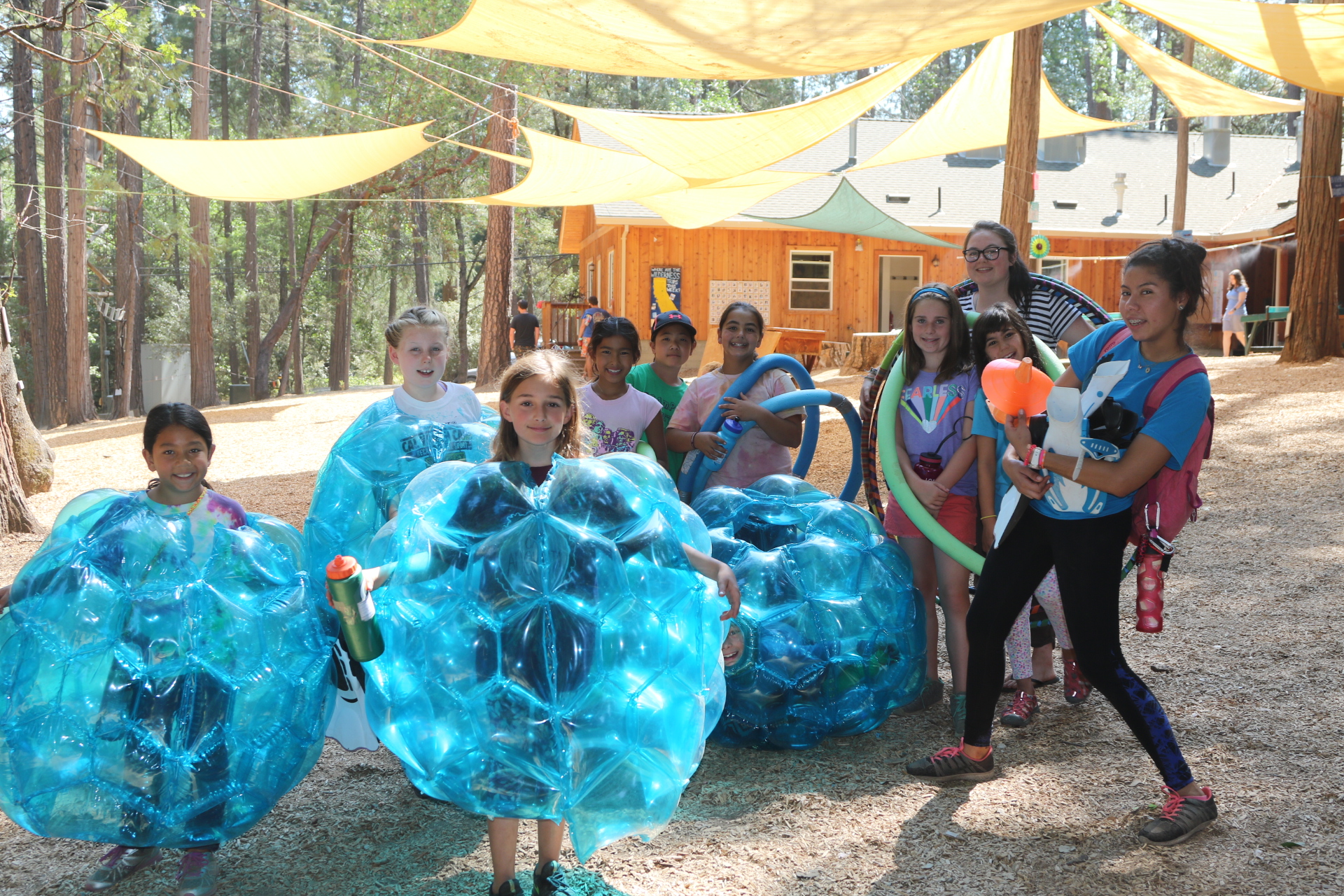
A group of children at an outdoor camp, joined by summer camp staff, some wearing large blue inflatable suits and others holding colorful inflatable toys. Trees, shade sails, and a wooden building are in the background.

Ways to Experience WWS At Home

Wish, Wonder, Surprise . . . consider how you might enrich your family’s life with it throughout the year . . . add summer camp as a powerful, nutritional supplement.
  • Ask questions that don’t have yes or no as an answer. Did you ever Wonder why human beings can’t describe the scent of one another in words? We need to use other words, which seem oddly awkward and inept for the task.
  • Express Wish, Wonder, and Surprise when you experience them.
  • Seek out Wish, Wonder, and Surprise. Take the same space and notice something new. In nature, you can examine closely one square foot, one square yard, or some other small space and really see what all is there.
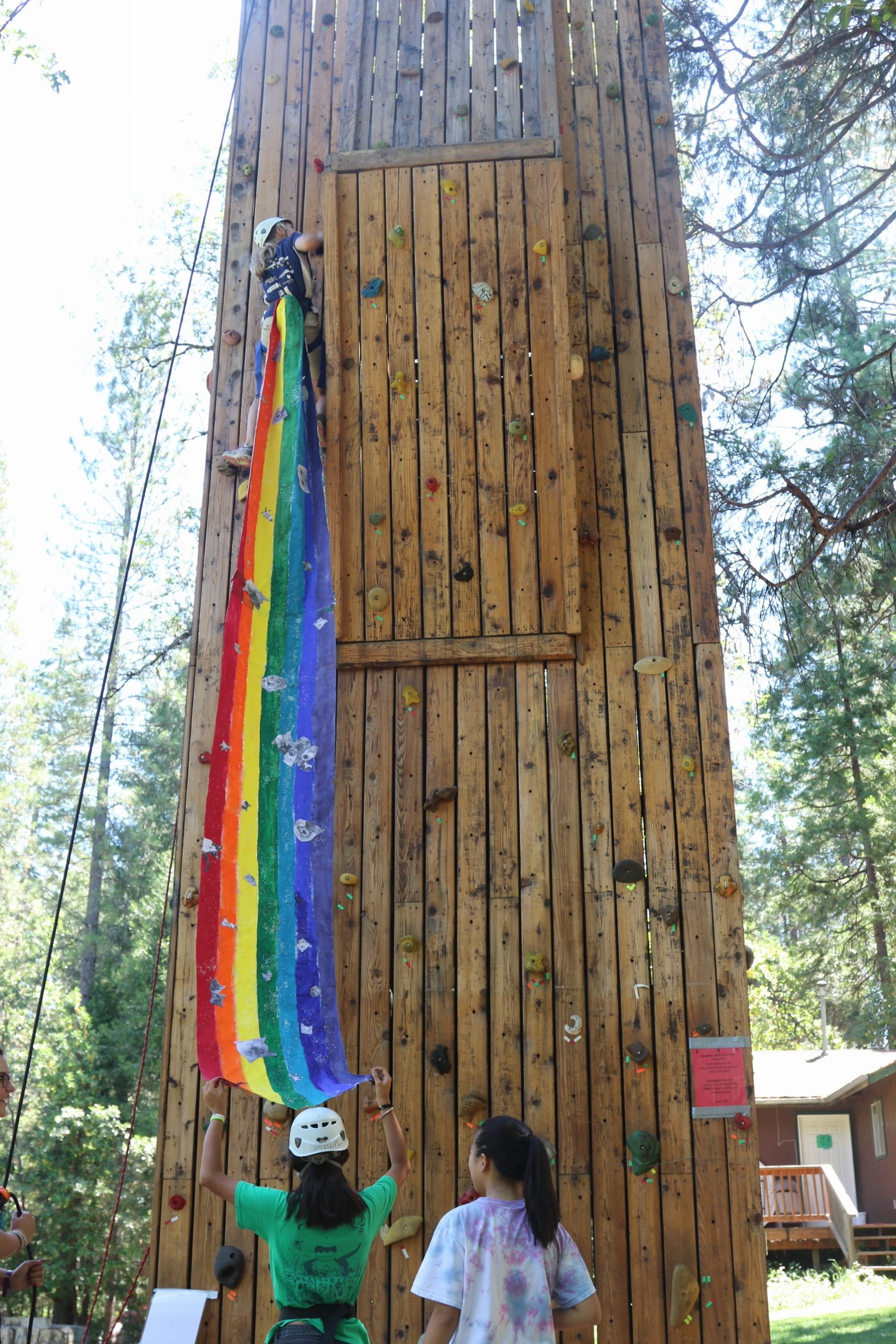
A child climbs a tall wooden rock climbing wall, while two people at the bottom hold a long, colorful rainbow flag that trails up alongside the climber. Trees and a cabin are visible in the background.
  • Be fanciful in your thinking and bend the rules of what is known and possible.
  • Play 20 questions.
  • Do things actively together. Read the same book and think of other twists and possibilities the author didn’t explore. Watch a television show and consider the story as the middle. What happened before and after it?
  • Talk over dinner every night. What was learned and yet to be learned about something? What did people notice that day? Did anyone find anything or any thought surprising?
  • If anyone remembers their dreams, talk about them over breakfast, or dinner if notes are jotted down.
  • Go outside and play without anything you normally play with. Play with only non-man-made objects.
  • Invite people over and talk about more than mundane happenings or other people.
  • Spend time with, or visit, an infant and toddler. They live in a constant state of Wish, Wonder, and Surprise.
  • Attend lectures and presentations, talk about the ideas beforehand, ask questions at the talk, seek the speaker out afterwards, talk about the ideas on the way home.
  • Enhance the reverence for ritual and traditions, more purposefully pulling at the desired intent. (Intentional Family, Doherty, 1999)
  • Travel, if that is an option. Culture varies within countries, and certainly between them.
  • Reduce fear as much as possible. If you know something to be incorrect, ask Socratic questions so that the “answer” is arrived at by the other person. A child can be told they are wrong, or discover the path by which they find themselves right.
  • Be willing to say “I don’t know.” And, “Let’s find out!” Or, “Let’s think about it!”
  • Commit to experiencing one new thing every weekend.
  • PLAY! The opportunities are everywhere, and play is the natural expression of Wish, Wonder, and Surprise.

Creation: Wonder and Surprise Combined With Wish, Resulting in Creative Action

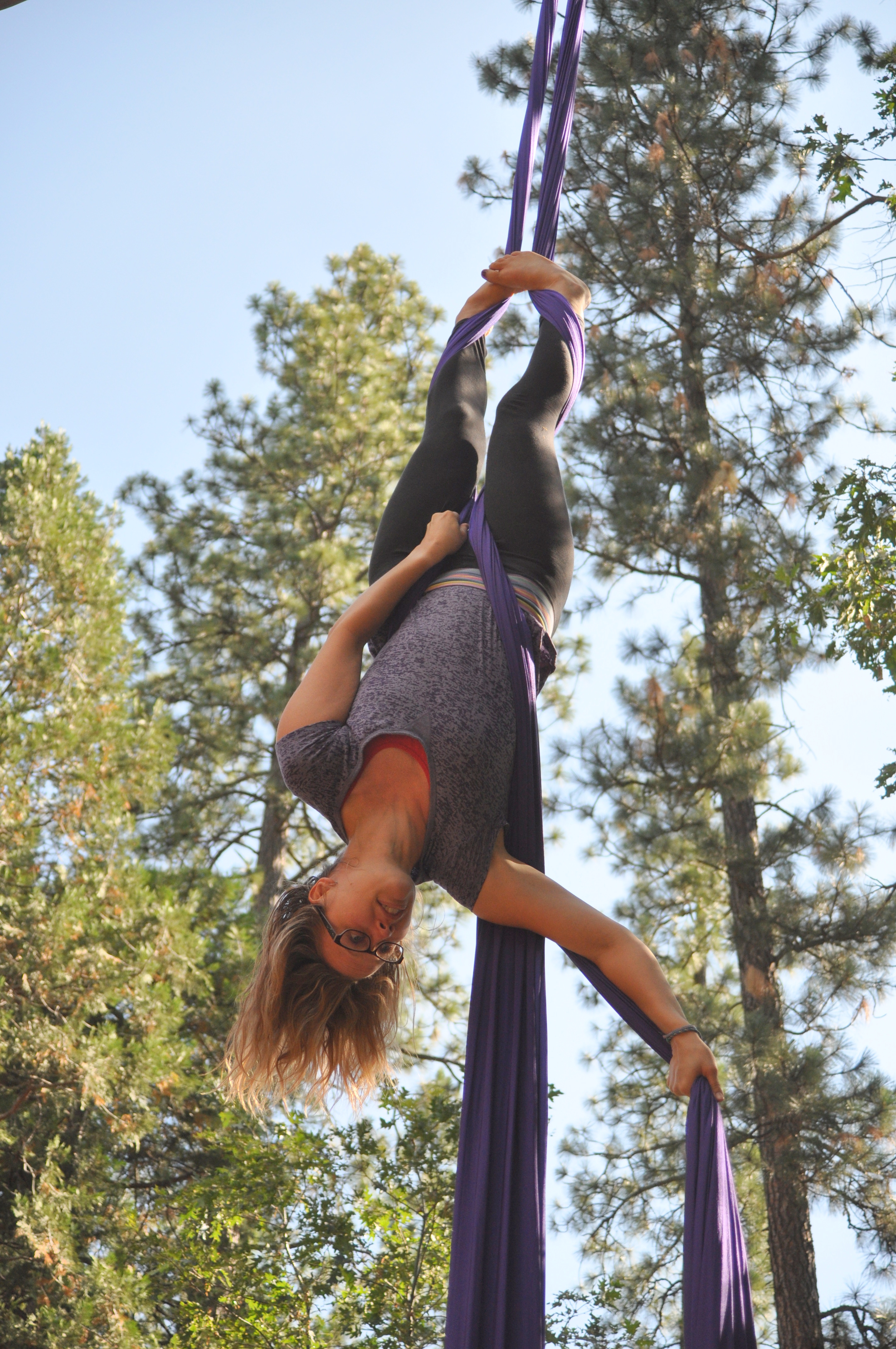
A woman performs an aerial silk routine outdoors, hanging upside down from purple fabric with tall pine trees and a clear sky in the background.
  • Thomas Paine, Common Sense, and the imagination required to conceive the constitution
  • The 9/11 commission report cited “failure of imagination” in regards to planes being used as weapons. Al Qaeda was creative.
  • Pyramids or the Mayan temples
  • The Dutch levy system, compared with the one in New Orleans
  • Putting a man on the moon
  • Theory of General Relativity
  • Wondering and discovering that the Sun does not revolve around the Earth
  • Consciousness and the brain and artificial intelligence beginnings
  • SETI (Search for Extra-Terrestrial Intelligence)
  • Dreams as a study of a human being, and humans in general
  • The discovery of DNA and Stem Cells

“Imagination is more important than knowledge. For knowledge is limited to all we now know and understand, while imagination embraces the entire world, and all there ever will be to know and understand.” – Einstein

Related Links

A few extra links of interest related to the experience of or thoughts around Wish, Wonder, and Surprise.

Want to read a PDF version of this page?
Here you go!